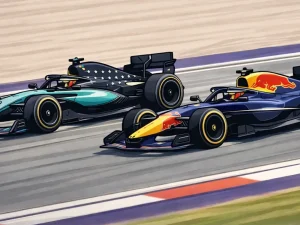
McLaren has pulled off one of the paddock’s more significant backroom grabs in years, confirming that Gianpiero Lambiase will leave Red Bull and join the Woking squad as Chief Racing Officer, reporting to team principal Andrea Stella.
It’s a move that lands with a thud because Lambiase isn’t just another senior hire with an impressive CV. He’s been Max Verstappen’s race engineer since May 2016, the voice on the other end of some of the most tense, funny, and razor-edged radio exchanges of the modern era — and, more importantly, a central figure in the machine that turned Verstappen and Red Bull into a relentless winning operation.
McLaren’s announcement comes with an important caveat: Lambiase will arrive “no later than 2028”, when his existing Red Bull contract expires. In other words, this isn’t a sudden mid-season divorce; it’s a long-lead, high-value commitment that gives both parties time to manage the handover — and gives McLaren time to design a role big enough to justify the wait.
Zak Brown, never shy about talking up a statement signing, framed it as a strike for a team already moving in the right direction. “Happy to share that GianPiero Lambiase will join the McLaren Mastercard Formula 1 Team as Chief Racing Officer, reporting into Team Principal Andrea Stella, when his contract ends no later than 2028,” Brown wrote. “He joins an incredible team under Andrea’s leadership and I’m excited about what we can achieve together.”
McLaren’s choice of title is telling. “Chief Racing Officer” isn’t a legacy box on the org chart — it’s a role that suggests authority across the race team’s core functions: operational decision-making, process, standards, and the sort of calm, drilled discipline that decides points on messy Sundays. This is less about bolting on another smart head and more about hardening the team’s trackside spine.
It also shuts down, at least for now, the more dramatic reading that had started to swirl around the deal. There had been suggestions that Lambiase could be lined up as a future team principal, particularly amid paddock noise linking Stella with a possible return to Ferrari. But McLaren’s structure as announced is clear: Stella stays in charge, Lambiase reports in.
From Red Bull’s side, the language was equally deliberate. The team confirmed Lambiase will leave in 2028 at the end of his current deal and stressed continuity until then. “GP is a valued member of the team, which he joined in 2015,” Red Bull said. “Until his planned departure, GP continues in his roles as head of racing and as race engineer to Max Verstappen. The team and he are fully committed to adding more success to our strong track record together.”
That last line is doing a lot of work. Red Bull knows what this looks like from the outside: the Verstappen engineer — a key figure in the inner circle — choosing to jump, even if the jump is still some way off. And because everything at Red Bull is inevitably viewed through the Verstappen lens, the move will prompt the obvious question about what it means for the driver’s long-term comfort inside the team.
The honest answer, based on what’s been stated publicly here, is that it doesn’t have to mean anything immediate. Lambiase is staying put until 2028. Verstappen continues with the same engineer in the same roles. Red Bull is signalling business as usual.
But paddock politics doesn’t wait for contract end dates. Announcing a departure this far in advance changes the temperature. It creates a timeline everyone will watch, invites speculation every time Red Bull has a scrappy weekend, and quietly hands McLaren a talking point: if you can convince one of Red Bull’s most trusted operators to commit, you can convince others too.
That’s part of what makes this feel like a continuation rather than an isolated strike. McLaren has already been in the habit of hoovering up Red Bull talent, with chief designer Rob Marshall and sporting director Will Courtenay among the prominent names to have made the move in recent years. Lambiase adds something different to that list: less about pure technical direction, more about the race-day craft of turning potential into results, lap after lap, call after call.
There were other suitors, too. It’s believed Aston Martin had approached Lambiase amid its own senior-team manoeuvring, before Jonathan Wheatley — now no longer in that role, having departed as Audi’s F1 team principal — had been discussed as a favourite to succeed Adrian Newey. McLaren, though, has won this particular fight, and the fact it has done so speaks to how far its credibility has travelled under Stella.
Ultimately, the biggest significance may be cultural. McLaren isn’t just collecting big names; it’s collecting habits — the procedures, language, and uncompromising standards that have defined Red Bull’s trackside edge in the Verstappen era. Lambiase has been a key part of that. Bring him in, and you don’t just gain an individual. You gain a reference point for what “good” looks like when the pressure is highest and the margins are smallest.
Whether this becomes a transformative hire will depend on what McLaren asks him to own and how quickly the team can translate his experience into sharper execution. But as statements of intent go, it’s difficult to read this as anything other than McLaren telling the paddock it’s done being impressed by other people’s operations — and is building one it expects others to envy.