Spielberg has barely fired into life and the paddock’s already doing what it does best: treating Friday in Austria like an audition for 2027.
The driver market chatter has been bubbling for weeks, but the current read from inside the lane is that two names are effectively holding the release valve. Max Verstappen and Fernando Alonso sit at the centre of the next big round of moves, because whatever they decide doesn’t just fill one seat — it sets off the kind of chain reaction teams privately dread and publicly deny.
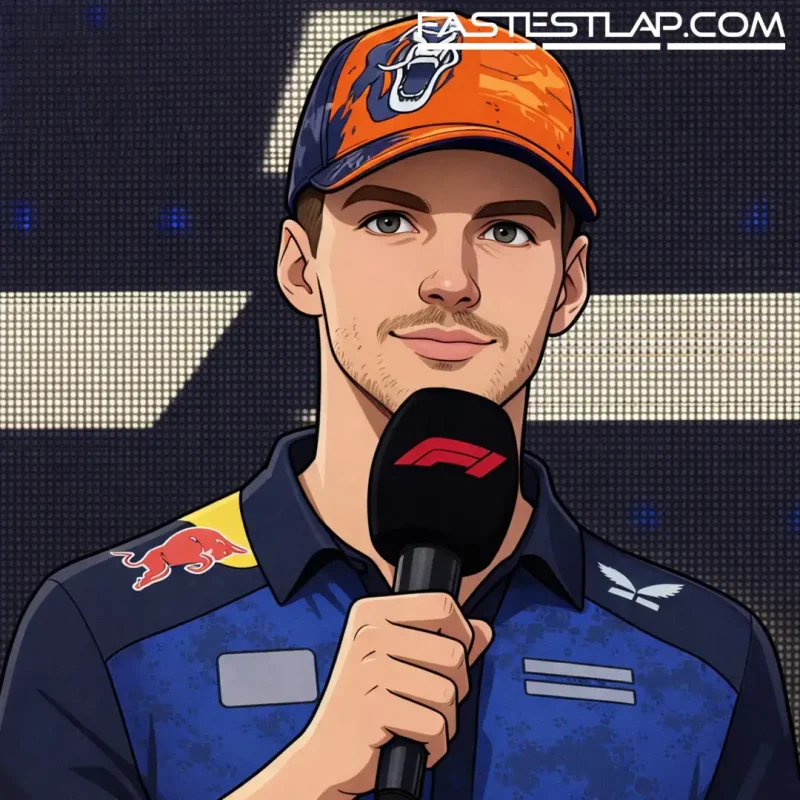
Verstappen’s situation remains the axis. When the grid’s most valuable asset is even loosely connected to uncertainty, every team with ambition starts gaming out scenarios, and every driver with a contract somewhere else starts getting “feelers” from people who swear they’re only asking hypotheticals. It’s less about one team landing him than it is about the knock-on effect: a top-line vacancy anywhere near the front tends to shuffle the order right down to the midfield.
Alonso is the other hinge, for different reasons. His next call — whether he wants to keep going, and if so on what terms — has an outsized impact because it influences planning as much as performance. Teams don’t just sign drivers; they sign timelines. If Alonso’s plans shift, it doesn’t only open a cockpit, it changes how aggressively the surrounding teams push their own negotiations, their junior pipelines, and their stop-gap options.
Against that noise, Carlos Sainz is trying to do something that’s almost unfashionable in modern F1: pause.
Sainz has been linked with Audi as a potential destination for 2027, a rumour that won’t die because it makes a certain kind of sense on paper and because the market is primed to believe anyone with options will at least listen. But what’s notable this weekend is the line coming from Sainz’s side: he wants his management to downshift the talk, not accelerate it.
The message is that he’s focused on Williams’ rebuild and doesn’t want to be seen as a driver spending his season with one eye on the exit. That’s not a small point in a team trying to drag itself up the order. Internally, squads can live with a driver exploring the market; what they struggle with is the distraction tax — the constant questions, the speculative narratives, the sense that the project is temporary. If Sainz is asking his representatives to shelve the noise for now, it reads like an attempt to control the temperature around him rather than a denial that conversations might happen later.
And it isn’t only drivers being traded in rumours this week. One of Red Bull’s long-serving figures, Paul Monaghan, has been linked with a surprise move away from Milton Keynes. Team principal Laurent Mekies has been asked directly about it, and the fact the question even lands tells you how jumpy the personnel market remains.
In the modern era, these staff stories aren’t garnish — they’re a proxy war. Rival teams monitor technical and operational talent like hawks, and one senior departure can spark a dozen assumptions about internal stability, future development direction, or who might follow. Whether this particular story has legs or not, it’s another reminder that “silly season” is no longer confined to drivers. It’s a year-round contest for brains as much as for lap time.
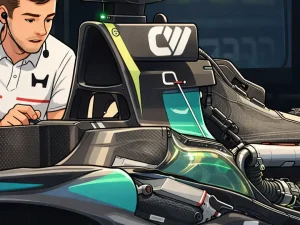
Speaking of lap time, the FIA has arrived in Austria with a fresh technical clarification aimed at shutting down increasingly elaborate diffuser concepts. The detail that matters is how it got onto the FIA’s desk: it was prompted by a design query from Ferrari, which centred on the Mercedes W17’s diffuser.
That’s classic paddock behaviour — not necessarily an accusation, but a pointed question posed in the language of regulation. Teams rarely ask those questions out of pure curiosity. They ask because they’ve spotted something they either can’t replicate quickly enough or suspect stretches the intent of the rules. The FIA’s response suggests it agreed the area needed tightening, which, in practical terms, usually means someone has to change something. In this case, Mercedes has had to make an adjustment.
It’s worth underlining what that does to the competitive picture in a weekend like Spielberg. When a clarification lands and a team is forced into a change, it’s not always a dramatic performance hit — sometimes it’s minor, sometimes it’s nothing at all — but it can disrupt correlation, it can alter how a car behaves in specific phases, and it can steal precious set-up time on a sprint-like circuit where detail matters.
On track, Friday’s early statement came from the championship leader. Kimi Antonelli topped FP2, which is the sort of line that looks simple on paper but carries weight in the garage. When the driver leading the championship starts a weekend quickly, it changes how everyone else frames the session: is this genuine pace, or are they showing their hand early? Either way, it’s a reminder that Mercedes has arrived in 2026 with a package capable of setting the tone, even amid regulatory nudges.
Red Bull, for its part, has brought the biggest upgrade bundle of the leading teams: a seven-part development. That’s a sizeable commitment for this point in the season and it speaks to urgency — whether that’s about clawing back time, consolidating an advantage in a particular area, or simply reacting to what rivals have found. The subtext at Spielberg is that Red Bull is pushing hard on multiple fronts: performance development, staff continuity questions, and the ever-present Verstappen orbit.
McLaren, meanwhile, is in the mix again, keeping the Friday picture nicely inconvenient for anyone who’d like the pecking order to settle down.
And Cadillac’s weekend has already delivered a reminder of how brutal the learning curve can be, even when the parts count looks impressive. Cadillac brought the largest set of upgrades of any team — 10 performance changes — but both cars ran into problems. That’s the double-edged sword of development volume: more new pieces can mean more potential performance, but also more ways for a weekend to unravel before you’ve even reached parc fermé.
So yes, the Austrian Grand Prix has started with Antonelli quickest, Red Bull unloading boxes of new parts, the FIA sharpening its stance on diffusers, and Cadillac firefighting. But the bigger picture is that the paddock’s political machinery is spinning just as fast as the cars.
Verstappen and Alonso remain the names that could tilt the market, Sainz is trying to keep his own storyline from becoming a sideshow, and even the technical regulation process is being used — as ever — as a competitive lever.
In other words: welcome to Austria. It’s never just about the lap time here.