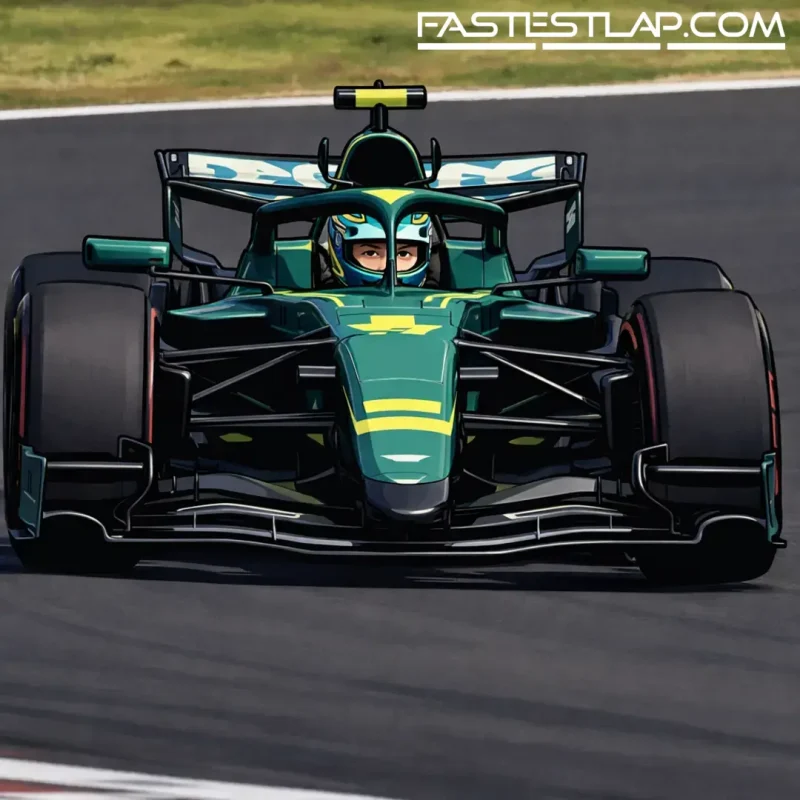
Aston Martin didn’t go into 2026 looking for a gentle bedding-in period. It tore up a comfortable Mercedes customer model, put Honda badges back on the bodywork as a full-fat works partner, and handed Adrian Newey the keys to the whole operation after Andy Cowell’s removal. That’s not a plan designed to finish seventh with dignity; it’s a bet that you can buy yourself into the front row of a new rules era.
Three races in, it’s also a reminder that the most expensive ingredient in Formula 1 isn’t carbon fibre or CFD time — it’s stability. And right now the AMR26 programme is living week to week, not lap to lap.
The paddock’s pre-season read on Newey’s first Aston was all over the place. Some reckoned the sport’s most decorated designer was about to deliver another regulation-cycle ambush, the sort of opening gambit that made rivals look like they’d been working from the wrong exam paper. Others muttered that this was a man late in a long career, about to produce something bulky and compromised. The truth, as ever, is more awkward: the car’s ideas may be sharp, but the project’s foundations have been shaking — literally — since it first tried to leave the garage.
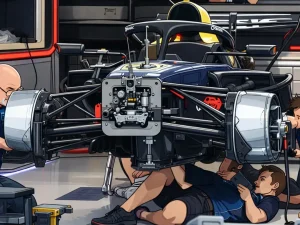
Aston Martin’s Barcelona shakedown told you plenty before it told you anything about pace. Late out, barely running, then broken down almost immediately as the integration between Honda’s power unit systems and the car triggered an energy recovery issue. Bahrain testing, the one moment teams crave to stack mileage and understand their new energy-management lives, became an exercise in frustration for both Fernando Alonso and Lance Stroll.
The central problem has been described with a candour you rarely hear when a new partnership starts souring: vibration. Not the vague “some oscillations we’re looking at” kind — but a level severe enough that the battery pack has been shaking itself to the point of failure. Newey’s explanation in Australia was stark: the power unit is the source, the chassis is the receiver, and a carbon structure doesn’t politely soak it up. It transmits it.
Worse, this wasn’t only costing lap time and mileage. Newey went as far as talking about the risk of “nerve damage” for the drivers while countermeasures were being trialled. By China, the issue had graduated from embarrassing to untenable. Stroll was out on Lap 9 with a power unit problem; Alonso made it two-thirds distance before pulling the pin, overcome by the discomfort of the vibration.
That’s the part that should really worry Aston Martin, beyond the points column. A reliability problem is a technical headache; a reliability problem that physically compromises the driver becomes a political one inside the team, because it changes what’s acceptable to ask of your lead asset. Alonso will tolerate plenty — he always has — but there’s a difference between “we’re slow” and “this is hurting me”.
There are no public signs the Aston-Honda relationship has turned poisonous, but you can feel how quickly the goodwill is being spent. Aston Martin hasn’t hidden the cost of Honda’s early shortcomings. While the Mercedes-powered teams banked huge mileage and learned how to operate under the new demands of the regulations, Aston was stationary, chasing a baseline of “finishes the session” rather than “learns something useful”.
Honda’s defence is essentially that the vibration looked acceptable on the bench and becomes destructive once installed in the AMR26 — amplified by the way it’s integrated. And Honda has also pointed to late requests from Newey to change the battery integration design, in precisely the area that has proven fragile. That may be part of the story. It can’t be all of it.
The more interesting tension is what sits behind those engineering details: who, exactly, is in charge when it goes wrong?
Newey is not operating as a conventional technical director inside a stable hierarchy. He’s taken full control following Cowell’s exit, while Aston Martin’s wider senior structure has been in motion for months — Enrico Cardile only took charge of the technical department in August 2025. This is a team still learning how to be the team it wants to become, now trying to do it in the harshest possible conditions: a fresh regulation cycle, a new works power unit relationship, and a car that — by Newey’s own description — is “tightly packaged” and interpretable as “aggressive”.
Aggressive concepts can be worth the trouble when the car runs. When it doesn’t, the aggressiveness becomes the villain of every debrief.
Newey has talked up how much closer Aston’s mechanical and aero departments have had to work to achieve the shapes he wanted, and how the front and rear suspension architecture plays into manipulating the flow field. That all sounds like the usual Newey recipe: compact packaging, detail-driven aero, and a chassis with the bones of something quick. Alonso, for his part, has called it a car with “a lot of potential”, while Stroll has admitted it’s not exactly the “rippiest beast” through corners.
But potential is a currency you can only spend if you’re still in the game by the time it matures. And there’s an unspoken fear here for Aston Martin: becoming the testbed that does the painful early miles for Honda, only to watch the competitive payoff land too late for the current driver line-up — or worse, too late for the project’s internal patience.
That’s why the Suzuka result mattered, even if it was only a first step. Alonso getting to the flag marked Aston Martin’s first finish of the season and, more importantly, suggested the reliability “platform” is finally starting to exist. You can’t tune, you can’t correlate, you can’t upgrade with any confidence until you’ve stopped putting out fires.
Aston Martin’s first visible upgrades in Japan — a revised front wing and floor edge — were framed by Alonso not as a performance lunge, but as correlation work: making sure the team’s expensive new tools match reality before it starts throwing development at a mirage. It’s not glamorous, but it’s what serious teams do when they don’t trust their own numbers yet.
The other subplot is leadership. Newey is reportedly looking for a team principal to take over the role he’s currently occupying, which reads less like an admission of failure and more like an acknowledgement of what happens when the sport’s best idea-generator is forced to spend time being a structural pillar. People who’ve worked with Newey before will tell you he’s at his most dangerous when he can disappear into the technical shadows and let someone else absorb the noise.
Aston Martin, in other words, is trying to build two things at once: a fast car and a functioning organisation around it. The early weeks of 2026 have made that painfully obvious.
It’s been a brutal start and there’s no point dressing it up. But if Suzuka is the first sign the shaking can be tamed, the story of Aston Martin’s season may yet pivot from humiliation to salvage — and from salvage to something more meaningful once the team has stopped living in crisis mode. The trouble is that in modern F1, “eventually” is never a comforting timeline, especially with Alonso at 45 and Honda already being told by Newey that a sizeable combustion power step is needed for 2027.
For now, Aston Martin’s reality is simple: it’s paid for a seat at the top table. It just hasn’t managed to stay in the room long enough to eat.