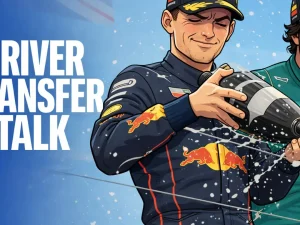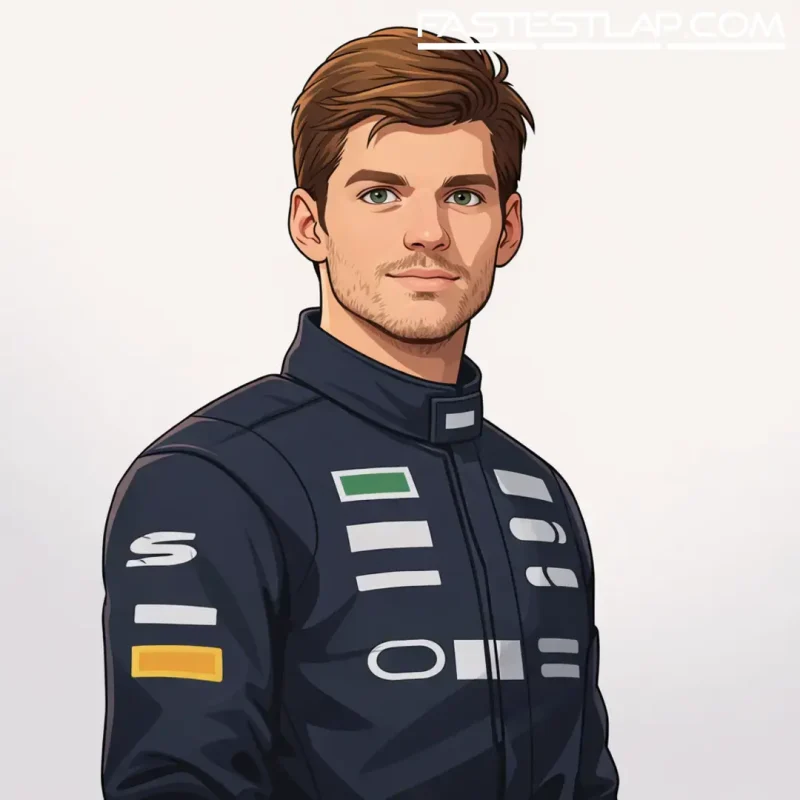
Ralf Schumacher has lobbed a properly spicy grenade into the early-2026 paddock chatter: a future where Max Verstappen ends up at McLaren, with Oscar Piastri heading the other way.
On the face of it, the idea reads like peak silly season fever arriving several months early. Verstappen, after all, is contracted to Red Bull through the end of 2028. Piastri signed a multi-year McLaren extension ahead of last season. And yet the timing of Schumacher’s comment isn’t random, because one key figure is already on the move — and he’s exactly the sort of person Verstappen would notice.
GianPiero Lambiase, Verstappen’s long-serving race engineer and one of the few voices the Dutchman consistently trusts in the heat of battle, is McLaren-bound. The team confirmed last week that Lambiase will join Woking as chief racing officer, arriving “no later” than 2028 after months of speculation. That creates a neat little overlap with Verstappen’s contract horizon, and it’s the overlap Schumacher is leaning on: if Verstappen ever did decide Red Bull wasn’t the place to spend the next phase of his career, having his closest operational ally already embedded in the McLaren structure would make that jump feel less like a leap into the unknown.
The driver-engineer relationship in modern F1 gets talked about like it’s a nice-to-have. In reality, at the sharp end it’s often a competitive weapon. Lambiase isn’t just a calm radio presence — he’s been part of the Verstappen machine at its most relentless, shaping decision-making on the pit wall and inside the cockpit, smoothing the rough edges and, when needed, pushing back. Put bluntly: if you were trying to sell Verstappen on a new environment, you’d struggle to find a better piece of emotional and technical continuity than “GP” already being there.
That’s why Juan Pablo Montoya’s reaction is also worth clocking. He’s questioned whether Red Bull could — or should — have found a way to keep Lambiase by offering him something more senior. And that’s the sting in this story: not that Verstappen is imminently packing boxes, but that Red Bull has allowed a potentially destabilising departure in the inner circle.
Because even if Verstappen never follows, the mere perception that the drawbridge is down is uncomfortable for any team built around one superstar. Red Bull’s public line will be that people move on, structures endure, and contracts are contracts. Internally, though, there’ll be a recognition that losing a key lieutenant to a direct rival creates narratives you don’t control — and F1 loves a narrative vacuum.
McLaren, meanwhile, can afford to let the rumours breathe. It’s a compliment to be linked with Verstappen in any context, and it keeps the spotlight away from the more complicated question: how do you keep two top drivers happy in a sport that inevitably tilts toward one? There’s no suggestion Piastri is on the brink, but Schumacher’s proposed “swap” naturally implies a scenario where McLaren would have to make a cold call on its own line-up. That sort of decision usually arrives when a team believes a generational talent is available — and that’s exactly what Verstappen represents.
Away from the speculation, there are more immediate headaches elsewhere on the grid. Aston Martin’s start to 2026 has been grim: no points from the opening three rounds in Australia, China and Japan, with the AMR26 plagued by severe vibrations from its Honda engine. Fernando Alonso and Lance Stroll have effectively been asked to race a car that’s physically punishing as well as uncompetitive, which is a brutal combination this early in a season where everyone is still learning their new baseline.
The vibrations issue is the kind of problem that doesn’t just cost lap time; it chews through confidence, endurance and development direction. If the drivers can’t trust what they’re feeling, and the engineers are fighting symptoms as much as root causes, upgrades become guesses rather than steps. In a championship that’s already moving at its usual unforgiving pace, Aston Martin can’t afford many more weekends spent simply surviving.
On the calendar front, don’t expect the sport to be heading back to India in 2027. Despite reports suggesting the Buddh International Circuit could return, Formula 1 has ruled out the possibility for that season. India last hosted an F1 race in 2013 — Sebastian Vettel’s final title year — and for now it remains firmly in the “maybe someday” folder rather than an active plan.
And, in a more reflective corner of the day’s news cycle, Jean Todt has offered a rare insight into Michael Schumacher the person, describing him as “quite a fragile human being” beneath the famously forceful exterior. Todt suggested Schumacher masked shyness with an almost arrogant presentation — an observation that will resonate with anyone who watched how he weaponised certainty as a competitive tool. Schumacher, of course, has not been seen in public since suffering severe head injuries in a skiing accident in December 2013.
Back at the pointy end of 2026, Schumacher’s Verstappen-to-McLaren thought experiment is easy to dismiss as talk. But it’s also a reminder of how quickly “impossible” moves become merely “unlikely” once the right people start shifting around. Lambiase leaving Red Bull is a tangible change in the chessboard. Whether it ever becomes an invitation for Verstappen to move is another matter — but the fact it can be argued with a straight face tells you plenty about how the paddock is reading Red Bull’s internal dynamics right now.