Andrea Stella isn’t pretending McLaren’s 2026 start has been anything other than messy. Two race weekends, one actual start between the cars, and a points picture that didn’t match the team’s winter noise. But Suzuka shifted the mood in the Woking camp — not because everything suddenly worked, but because it finally looked like the MCL40 could.
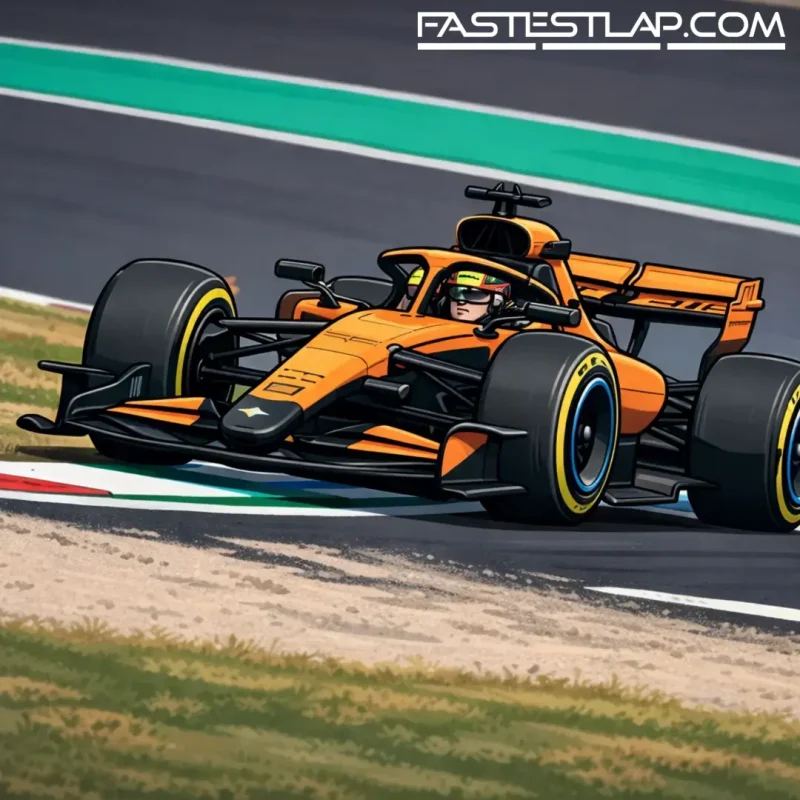
Oscar Piastri’s Japanese Grand Prix was the sort of evidence team principals crave: the kind you can point to and say, “There it is — that’s the ceiling.” He grabbed the lead off the line and, for a stretch, looked set to beat George Russell on pure racecraft and pace. Then the Safety Car arrived at exactly the wrong time, flipping the order and handing Mercedes’ Kimi Antonelli a second straight win. McLaren didn’t leave with the trophy, but it did leave with confirmation that the car isn’t fundamentally off in the way early-season chaos might’ve suggested.
Lando Norris, quieter all weekend, still brought home fifth. In the context of a season that began with a reconnaissance-lap crash for Piastri in Australia and a double non-start in China after technical issues, a solid two-car result almost felt like a luxury.
Stella’s view is that the MCL40 is a “very high-potential platform” — and the subtext is just as important as the quote. McLaren doesn’t believe it needs a rescue plan; it believes it needs time, mileage, and a sharper exploitation of what it already has.
“At the moment, our car, when we compare it to Ferrari and Mercedes, suffers a bit of a deficit in grip,” Stella said in Japan. “So Ferrari and Mercedes are faster than us in the corners. I think compared to Mercedes, we see that we are probably under-exploiting the power unit a little bit.”
That’s a revealing admission in year one of the new ruleset, when margins are being created as much by systems knowledge as by any single aerodynamic trick. McLaren’s relationship with Mercedes High Performance Powertrains is hardly new in the broader sense, but Stella has been candid that this generation of power unit — and the way it needs to be operated to get the best from it — is demanding a learning curve the factory outfit naturally starts ahead on.
“We are on a steep learning curve when it comes to getting the most out of the power unit, which is positive,” he added. “We are working with HPP to make sure that we get on top of all the potential, extracting all the potential that is available in the power unit.”
If that reads like polite corporate phrasing, it shouldn’t. In 2026, “under-exploiting” a power unit can be a whole performance tier when rivals are already threading the needle on deployment, harvesting, and how aggressively the car can be driven to support those strategies over a lap. The encouraging part for McLaren is that Stella is framing it as optimisation, not limitation: the engine isn’t the problem, the usage is.
And on the chassis side, he sounds even more certain there’s a clear plan.
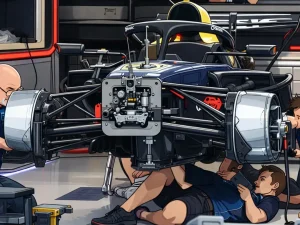
“Coming back to the chassis side, we understand exactly what to do in terms of putting in place the actions to improve the chassis,” Stella said. “Furthermore, it’s just about bringing upgrades that will increase the aerodynamic efficiency. These will happen in the next couple of events.”
Those “next couple of events” are going to land in a very particular moment. The calendar has been blown open by the cancellation of the Bahrain and Saudi Arabian Grands Prix, creating an unofficial spring break — a five-week gap that teams will treat as an R&D gift. Miami now has the feel of a mid-season reset button rather than the next stop on a rolling schedule.
There’s also a regulatory backdrop brewing. The FIA is evaluating, with team bosses, FOM and the power unit manufacturers, potential tweaks to energy management techniques in an effort to make the new rules’ racing dynamics feel more natural. Nothing has been decided in the material provided, but even the existence of that discussion tells you how much of the competitive order is still tied up in how these cars are being “driven” by software logic and driver technique as much as steering input.
Mercedes, unsurprisingly, is alive to what a reset could mean. Toto Wolff joked that he’d have happily kept those Middle Eastern races on the calendar, banking points while his team had a clearer early advantage — and he was just as quick to acknowledge that Japan was the first hint the advantage isn’t guaranteed.
“It could well be the case,” Wolff said. “People have learned now, the teams have learned. Drivers are starting to learn how to optimise these systems to their benefit, and we’ve seen that first indication today [Japan], what looked like a home run in the first two races isn’t the case.
“We’ve always warned. Miami is going to be, for me, a restart.”
That’s the key: the first phase of 2026 has been about survival and adaptation. The next phase is where the first meaningful upgrade cycles arrive, where teams stop guessing and start targeting. For McLaren, that’s exactly the point Stella has been driving at — the MCL40’s limitations are known, the fixes are in production, and the power unit integration is improving race by race.
The irony is that the break comes “for the wrong reasons,” as Stella put it, but he’s not hiding how useful it is. McLaren’s winter programme was brutally intense — the first on-track session in Barcelona came as early as January — and the trackside group hasn’t had much air since.
“It’s been one of the most intense winters that I can remember in my career in Formula 1,” Stella said. “It gives us the possibility to make the parts that we want to take trackside to evolve our car, make it faster… It gives us some more time to work with HPP… and it also gives the staff the time to take a little bit of a breath.”
McLaren’s early-season headline has been misfortune. But the more interesting story now is what happens when the noise dies down and the development work starts landing. Suzuka suggested the raw ingredients are already there. Miami will tell us whether McLaren can turn “high-potential” into something a lot more inconvenient for Mercedes — and, if the upgrades do what Stella expects, whether Piastri and Norris are about to find themselves in a real fight for wins on merit rather than opportunity.