Max Verstappen’s Nürburgring weekend had the look of a tidy warm-up turning into something far more useful: four hours of elbows-out GT3 racing, a car that felt broadly in the window, and a reminder that endurance prep can unravel for reasons that have nothing to do with driver form.
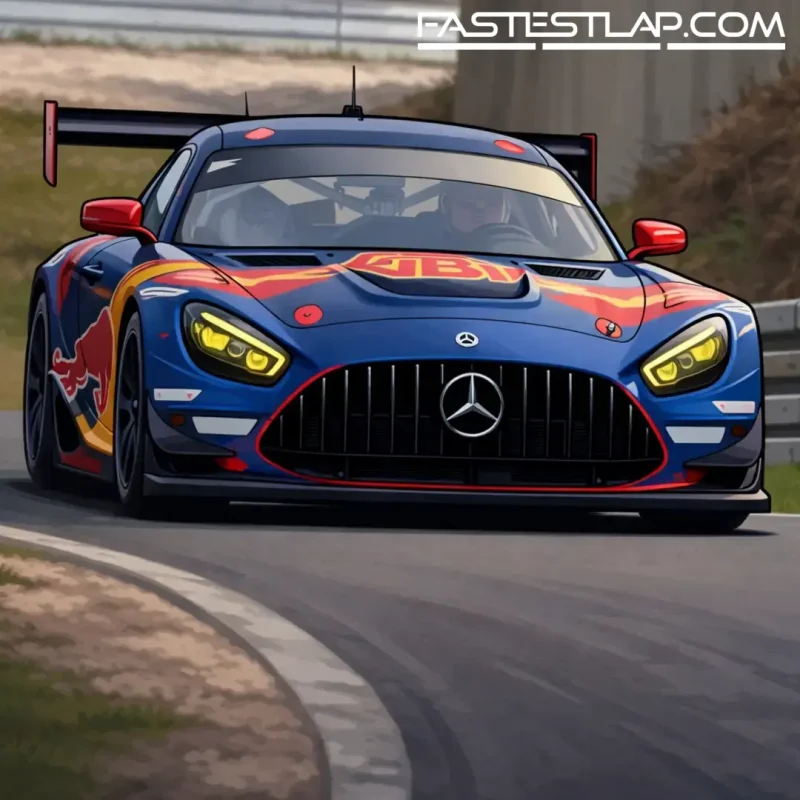
Verstappen and Lucas Auer were shaping up as genuine contenders in Sunday’s Nürburgring 24-Hour Qualifier, only for a broken front splitter to wipe out any realistic shot at the win. The #3 Verstappen Racing Mercedes-AMG GT3 had climbed from fifth to first in the opening hour with Verstappen aboard, and after the first sequence of stops he’d pulled a healthy lead. Then came the sort of endurance-racing gut punch that doesn’t care what your lap time looks like: a trip behind the garage doors and a 28-minute repair job.
The event itself began under a sombre cloud. Pre-race respects were paid to Juha Miettinen, who died following a crash at the circuit on Saturday. Once the green flag flew, Verstappen got on with the business of carving through traffic and building margin — the familiar Verstappen rhythm, just applied to a very different kind of chaos than he sees on a Formula 1 Sunday.
The key moment arrived during his second stint. Verstappen had already been planning to hand the car to Auer at the next stop to increase his team-mate’s seat time, but the stop became an autopsy. The team quickly identified a front-end issue that needed more than a quick look, and the car was kept in the garage for what it later described as “extensive repairs”.
By the time Auer rejoined, the race had moved on without them. The #3 emerged down in 87th — the kind of position that tells you the day’s narrative has shifted from “can we control this?” to “what can we salvage?” Auer did exactly what endurance drivers are paid to do in those moments, working back through the lower classes to finish 39th overall. It was solid damage limitation, but it didn’t disguise what had been thrown away.
Verstappen’s explanation after the chequered flag was blunt and, in its own way, slightly unsettling for any crew trying to build a reliable package for the big one in May.
“During the second lap of my second stint, I realised something was wrong. The splitter had broken off,” he said. “That’s strange, because I didn’t hit anyone, so I don’t know how it happened. We’ll have to investigate and sort it out.”
Splitter damage is a performance hit in any car, but on the Nürburgring — with its compressions, kerbs, traffic and the sheer variety of closing speeds — it’s also a confidence problem. If it’s not the result of contact, you immediately start asking harder questions: ride height sensitivity, mounting points, vibration, a previous strike you didn’t feel at the time. None of that is the driver’s job to solve, but it becomes the driver’s problem when the steering starts talking back mid-stint.
Still, Verstappen didn’t sound rattled by the experience. If anything, he framed the day as exactly the sort of stress-test you want before committing to a full 24 hours at the Nordschleife.
“I did have fun today. The car felt good, which I’m happy about,” he added. “I was able to complete my stints, even in traffic, which was quite intense. I had battles with other GT3 cars, so in that respect it was good preparation for the 24-hour race.”
That’s the useful takeaway amid the frustration: the pace was there, the comfort in traffic was there, and the situation he’ll face in the headline event — time lost for reasons outside a driver’s control — has already been simulated in the harshest way possible.
There is, however, one box Verstappen still hasn’t ticked.
“I’m as ready for it as I can be,” he said. “The only thing is that I haven’t driven in the dark yet. I don’t think you can do any more than that.”
The Nürburgring 24 Hours takes place on 16-17 May, and Verstappen has already confirmed he intends to race. After Sunday, he’ll arrive not just with encouraging speed, but with a very specific item on the pre-race checklist: understanding why a splitter can simply decide it’s had enough — and making sure it doesn’t happen again when the stakes are a full day, not four hours.