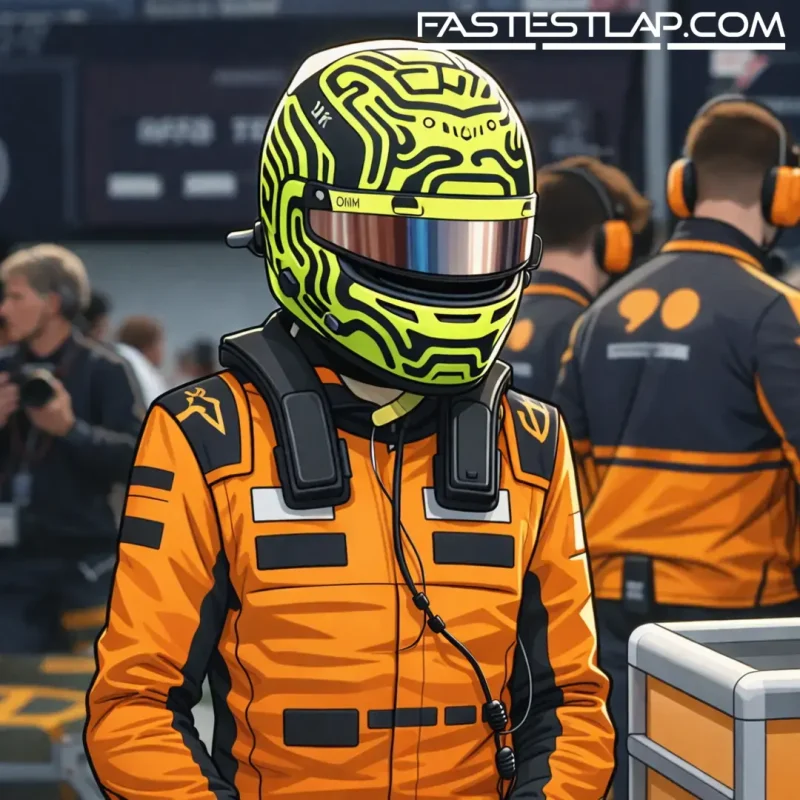
McLaren arrive in Miami with a strange sort of momentum: the kind that doesn’t show up neatly in the points table, but which can still swing a weekend if you’re paying attention.
On paper, Lando Norris has 25 points from the opening three races of 2026 — respectable, but hardly the clean continuation you’d expect from a team that swept both titles in 2025. In reality, McLaren’s early season has been defined by disruption. Oscar Piastri’s self-inflicted non-start in Australia set the tone, China unraveled completely with separate electrical issues preventing either car from taking the start, and suddenly the “normal” rhythm of a championship defence disappeared.
Suzuka, at least, offered something tangible. Piastri finally got racing laps under his belt and turned that into a podium, even leading for a large chunk of the first half — the kind of stint that tells you the underlying pace hasn’t evaporated, even if the reliability file is getting thicker.
Now the paddock rolls into Miami after a five-week gap that’s been shaped as much by absence as by preparation. Two race cancellations have created an awkward pause, but also a reset: regulation tweaks and fresh upgrades up and down the grid will begin to show their hand around Hard Rock Stadium. For McLaren, it’s an opportunity to turn a messy start into something more purposeful — and for Norris, it looks like a circuit that could flatter the MCL40’s strengths.
Miami has been good to him before. It’s where he took his maiden grand prix win two seasons ago, and it’s where Piastri topped the bill last year. So when Norris talks about the track “suiting” McLaren again, it’s not empty optimism — it’s a driver recognising a familiar set of corner demands, and a team that’s repeatedly got its car in the right window there.
“In some ways, it doesn’t change too many things,” Norris said when asked how this season’s changes could influence the Miami weekend. That’s a telling line in itself: even with the evolving picture around energy deployment and how it shapes qualifying and race craft, he’s essentially arguing that Miami’s DNA remains the same. High-speed commitment early in the lap, then a slow, awkward middle sector where traction and rotation matter, before the long back straight sets up the usual game of cat and mouse.
Norris’ point isn’t just that the car might be quick; it’s that the track might make for better racing under the current constraints. He hinted that the recharging requirements could fall in places that keep the fight alive rather than sterilising it — and that’s where Miami can get interesting, because it forces drivers into choices that are immediately visible on track.
“A lot of the corners are still going to have a high-speed first sector, and you’re still going to have the very slow-speed middle sector,” he said. “In some ways, because of how the straights are placed in the corners, you could still have, actually, some pretty good racing in terms of how you can use the battery and save the battery.
“But, if you use it quite often, you know the guy’s going to come back past you the next straight. So it could be great, and hopefully it is.”
That’s the subtle part: Norris is basically describing a circuit that can punish impatience. Spend your deployment to complete the move and you might be vulnerable immediately after; play the long game and you risk getting stuck in dirty air or missing the moment. If the new balance of harvesting and deployment creates more of those trade-offs, Miami’s layout is well set up to expose them.
McLaren, meanwhile, aren’t just chasing points — they’re chasing continuity. The early failures have been dramatic because they’ve been so avoidable, and because both cars have been hit in different ways. Getting through a normal weekend, building from Friday rather than firefighting from the garage, would be a step forward on its own.
But there’s also a more pointed target: a third straight Miami win. In a season already interrupted and reshaped by cancellations, those little streaks and circuit-specific strengths matter more than usual. They’re proof that, when the variables settle down, McLaren can still land a hit.
Norris is careful not to promise anything. He notes Japan suited the car more than the first two races, but stops short of claiming Miami will be a repeat. “How it will change things, I don’t know, we kind of have to wait and see,” he said — and that’s the reality when upgrades and regulation tweaks arrive all at once: you can have a theory, but the stopwatch gets the final word.
Still, the ingredients for a McLaren rebound are obvious enough. A circuit they’ve historically executed well at in the ground-effect era, a car that appeared far more alive through Suzuka’s faster sequences, and a weekend where the energy-management story could spice up the racing rather than dull it.
If McLaren can keep the electrons flowing and the procedures tidy, Miami might not just “suit” the MCL40 — it might finally let their season begin properly.