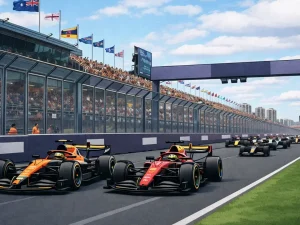
Montréal’s back on the agenda and, as ever, it’s shaping up as one of those weekends where Formula 1 can go from orderly to chaotic in the space of a single kerb strike. The 2026 Canadian Grand Prix at Circuit Gilles Villeneuve is a Sprint event, which means the paddock arrives with a little less runway than usual — and at a track that punishes even tiny misjudgements, that’s not nothing.
The schedule is tight by design: one practice session to get a baseline, then you’re straight into sessions that matter. If you’re a team that tends to “arrive on Saturday”, Canada on a Sprint weekend is a nasty place to cling to that habit. The margins are thin around the island, the walls are close, and the chicanes have a way of turning confidence into carbon fibre confetti.
All session times below are local Montréal time, with UK time in brackets.
Friday 22 May gets the weekend moving with FP1 from 12:30pm to 1:30pm (5:30pm–6:30pm UK), followed by Sprint Qualifying at 4:30pm–5:14pm (9:30pm–10:14pm UK). That’s effectively your only real “learning” window before parc fermé-style urgency creeps in and the track evolution starts to dictate the pecking order.
Saturday 23 May is a double-header: the Sprint begins at 12:00pm (5:00pm UK), set for 23 laps or 60 minutes, and later comes Grand Prix qualifying from 4:00pm–5:00pm (9:00pm–10:00pm UK). In other words: points first, pole second — and you’ll feel the compromises in how teams approach set-up, tyres, and risk. The Sprint can’t be treated as a free hit anymore, but overcommitting to it can leave you paying interest in qualifying.
Sunday 24 May wraps it up with the main event: the Canadian Grand Prix at 4:00pm (9:00pm UK), a 70-lap race or 120 minutes.
What makes this weekend particularly spicy is how Circuit Gilles Villeneuve amplifies the Sprint format’s worst habits. It’s 4.361km of long straights into heavy braking zones, with tight direction changes that demand a planted rear on entry and traction on exit — and there’s barely a metre of sympathy anywhere. If your car’s on edge under braking, you’ll know quickly. If your ride’s too stiff over the kerbs, you’ll know even quicker. And if you’re still searching for balance after FP1, you may end up searching for it with the clock running in Sprint Qualifying.
The circuit’s fan-favourite status is obvious: it’s fast, it rewards commitment, and it’s got that old-school “survive the lap” feel even in the modern era. But it also has a habit of making smart people look silly. One trip over the sausage kerb, one rear snap as the track rubbers in, one driver getting greedy on a late-braking move — and the whole weekend’s narrative can turn.
No wall carries that energy more than the final chicane’s exit barrier, still wearing its ‘Wall of Champions’ nickname proudly. The legend has grown because the mistake is always the same: you think you’ve nailed the chicane, open the steering a fraction too early, and the wall arrives like a bad punchline. It’s been superstitious for years, too — the kind of place drivers mention with a half-smile, even if they’d never admit it gets in their heads.
Sprint weekends also tend to magnify the “micro-battles” that define modern F1: team-mate comparisons, tyre usage games, and the tricky question of when to bank a lap versus when to chase the perfect one. In Montréal, traffic and timing matter even more, because one yellow flag at the wrong moment can wipe out a session — and with fewer sessions overall, there’s less chance to reset.
However it shakes out, the attraction is the same as it’s always been here: a circuit that rewards bravery but doesn’t romanticise it. Get it right and you look like a hero. Get it wrong and you’re inches from becoming another replay montage.