Fernando Alonso’s five-second penalty for speeding in the pit lane at the 2026 Austrian Grand Prix looked, on the timing screen at least, like the sort of avoidable error Aston Martin can’t afford right now. Alonso, though, wasn’t buying the idea it was a simple lapse on the limiter button. His read was more familiar — and more annoying for anyone who’s watched the team chase gremlins before.
Asked after the race whether it was a software issue or “a finger” mistake, Alonso shut down the latter immediately.
“No, it was not a finger,” he said.
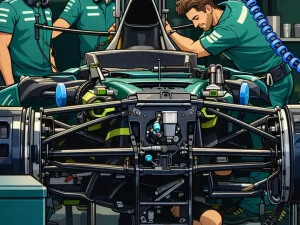
Instead, he pointed to a sensor problem Aston Martin has already seen this season: a front wheel speed sensor overheating and feeding the car the wrong numbers. In his telling, that’s what pushed the team into an improvised workaround and, ultimately, the infringement.
“They told me on the second stop to go around 75kph on the pit lane manually,” Alonso explained. “It happened sometimes in practice as well, a couple of weekends ago. The front wheel sensor sometimes gets too hot and reads a different speed. So, I guess it’s that again.”
In a race where Alonso ended up P18 as the last of the classified finishers, the penalty didn’t change the story of Aston Martin’s Sunday. But it did underline the bind the team is in: when you’re short on pace and waiting on a heavily revised package, even the basics become high stakes. You’re not just trying to find lap time — you’re trying to keep the operating window stable enough to gather anything useful at all.
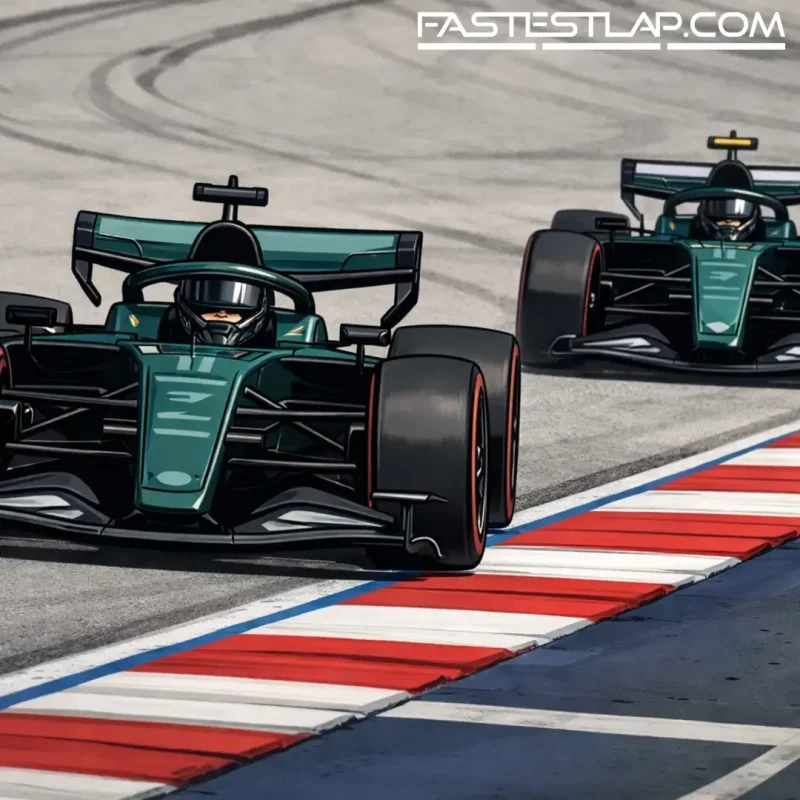
That “useful” part is doing a lot of heavy lifting at Aston Martin at the moment. Alonso was blunt about the reality: this is a holding pattern until the B-spec AMR26 arrives later in the summer. Until then, races are less about points and more about laps, and those laps are less about fighting than they are about building a reference for when the car finally changes shape.
“We tried to collect data for the team, obviously all the energy management and running behind different cars at the beginning of the race, and then when we get lapped, obviously we have the chance for a couple of corners to know the weaknesses of our cars,” Alonso said.
“It’s useful feedback. That’s probably the only thing we can do at the moment with the package we have and the pace we have, try to get things here and there to use that information for the future, and when the new car comes, hopefully be more prepared.”
There’s a certain gallows-humour logic to Alonso’s approach: if you can’t race, at least you can learn — and if you’re going to get lapped, you may as well turn those brief moments in traffic into a rolling wind-tunnel session. It’s also an insight into how Aston Martin is trying to extract value from a rough spell in which simple completion has been the first objective. Alonso noted that, aside from Barcelona — where he referenced a battery problem — the team has at least been seeing the chequered flag recently. That alone is progress when you’re trying to build an evidence base rather than guess.
Even so, the gap is hard to dress up. Over back-to-back weekends, the Aston Martins have been qualifying roughly a second off Cadillac — a detail that speaks to the scale of the job, not just the discomfort of a bad session. And yet, Alonso’s radio message after Q1 in Austria told its own story: he sounded almost upbeat, insisting it was a decent lap and that they were “getting closer”.
“It was a good lap. Not what we want, but not too far. Not too far. We’re getting closer,” he said over the radio.
When asked post-race how he rated Aston Martin’s improvement, Alonso stuck to the same theme — not that the car is suddenly competitive, but that the team is slowly building understanding of how to operate it, particularly around energy deployment when running close behind another car.
“I think we still understand more and more things,” he said. “Even the extra energy that you get when you get within one second of the car in front.
“All those kinds of things, it’s not that we have that much information, because we didn’t finish many races and we were not competing with anyone. So every lap we do, we get a little bit more prepared for later in the season when the car is competitive.”
That’s the tightrope for Aston Martin heading into the summer: stay clean, finish races, and keep the feedback loop alive, because the reset button — the B-spec AMR26 — is supposed to be the point where all this pain starts to pay off. If Alonso is right about the sensor issue returning, it’s another reminder that there are two development races running in parallel at the back: the big headline upgrades everyone sees, and the quieter fight to ensure the car’s own systems aren’t undermining the weekend before it’s even begun.
For now, Alonso is doing what he’s done for most of his career when the machinery isn’t there — compressing frustration into process. The points can wait. The data can’t.