By Andrew Maitland
Formula 1, a sport obviously with European roots, is presently gripped in a transatlantic political duel, a battle of legacies versus ambitions and an uncertain future. The protagonists? James Vowles, the strategist from Williams, and the American racing behemoth, Andretti.
Andretti. In F1.
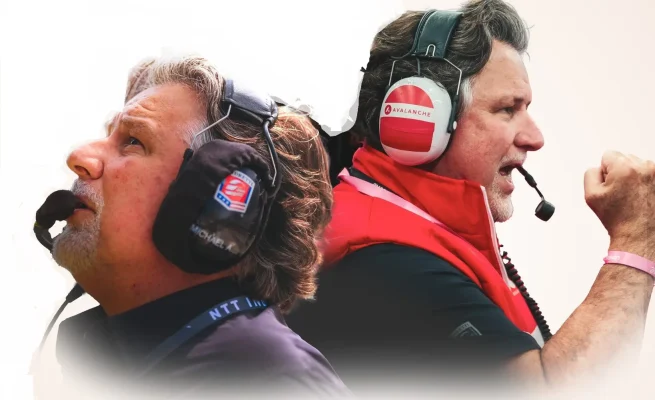
Michael Andretti, a failed Formula 1 driver bearing the weight of the transatlantic Andretti racing legacy, envisions a stratospheric entry into F1. Oh, the other F1 teams are worried about Andretti. Yes they are. Although there are a few exceptions.
But even they, like the Californian Zak Brown for example, have gone suddenly quiet.
Michael and Mario’s intent isn’t solitary. They’ve got Cadillac. Yeah, Cadillac! That means General Motors. GM.
Do I need to educate you about General Motors? Look it up.
This Andretti-GM alliance symbolises more than just an additional 2 cars on the grid. It’s an overt play for the rapidly-expanding American F1 market – a sentiment echoed strongly by Aston Martin’s normally-reticent Lance Stroll.
“There’s never been more fans, spectators at races, the audience is the highest it’s ever been,” Stroll said in his usual low-key droll. With circuits like the cringingly-cool Miami and the mind-boggling Las Vegas edition coming up, the US is morphing into a pivotal F1 frontier.
Now, to the politics. Because that’s where we always end up in Formula 1.
Liberty Media, F1’s commercial rights holder in the post-Bernie Ecclestone paradigm, exists in an unmistakably US-centric perspective. This American middleweight, with its vast media conglomerate and vested interests, could – actually, to your surprise, perhaps – potentially be leaning toward Andretti. However, the shadows of F1’s God-like European ancestry loom large. Its illustrious history, dotted with iconic names like Mario Andretti, exerts a formidable pressure. It’s a past that whispers – sometimes shouts – of traditionalism, prestige, and a certain English way of doing things.
Andretti’s aspiration seems to be disrupting this age-old symphony.
In this intricate weave, none other than James Vowles has emerged as a Luke Skywalker or perhaps even a modern-day Mark Hamill – perhaps the chosen gladiator representing the concerns of the established guard. His judgement is layered: secure the interests of indispensable teams like Williams, grappling with financial stability, but also position them favourably should opportunities arise with titans like GM. In other words, ‘Yes, please’.
Vowles’ manoeuvring paints the portrait of a broader conflict within F1. The sport is at an inflection point, torn between its rich European heritage and the beckoning of the lucrative and exciting and shimmering but uncertain American shores.
The present scenario isn’t merely about a new team’s entry. It’s emblematic of the and ever-present and deeply-underlying political battles that define Formula 1 – the modern phenomenon and simultaneously the eternal mainstay and historical icon. How does the sport navigate its historic European essence whilst accommodating the ambitions of the new American wave?
This tussle isn’t just about grid positions. It’s about F1’s very identity in the modern era.
Liberty Media’s money-driven inclinations, Vowles’ snide and calculated moves in cahoots, and Andretti’s progressive ambitions underscore this fundamental tension. It’s the familiar old dance of strategy, the clash of legacies, and a broader question of the direction our sport is heading in.
The stakes? Formula 1’s trajectory in an era where tradition meets transformation meets the future. As we stand witness, the sport’s next moves will not only shape races but redefine its everlasting global imprint, particularly in the lands of stars, castles, stripes and cobblestones.