For a split second at Balaton Park, the headline act wasn’t a rider but a cameraman named Joao.
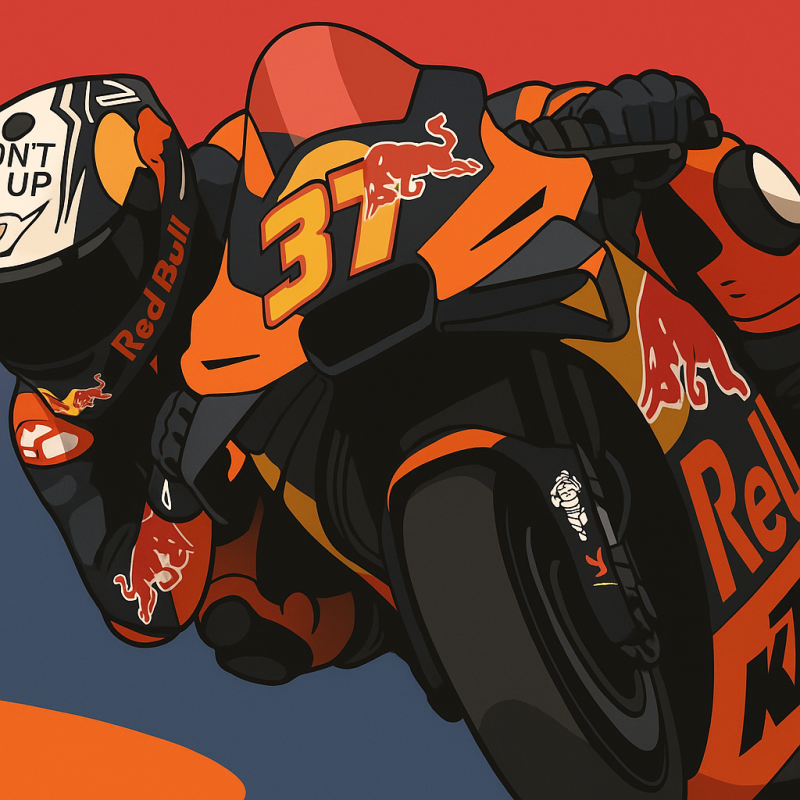
During Saturday qualifying for MotoGP’s Hungarian Grand Prix, Pedro Acosta lost control of his KTM at the flat‑out Turn 8. The bike skimmed the gravel, somersaulted, cleared the catch fencing and slammed into a trackside camera. Joao, stationed behind it, sprang out of the way in time. The camera took the hit. He didn’t.
MotoGP later shared the dramatic footage and confirmed the operator was unhurt. “Our cameraman, Joao, avoiding Pedro Acosta’s bike impact is probably the most shocking video you’ll see today! We’re so glad to see he’s OK!” the series posted on social media.
Acosta sought him out in the paddock afterwards, apologised and handed over a signed keepsake with an invite to the garage. In MotoGP’s clip, Joao explains, “The bike didn’t touch me,” though it “did hit the camera,” before adding, “The camera can be fixed!” Acosta, who reckoned the bike launched to around three metres, told him: “Sorry for the scare! Just knowing you’re OK is more than enough!”
The near‑miss landed like a flare in an already sensitive conversation about Balaton Park’s safety, with Hungary returning to the MotoGP calendar this season for the first time since 1992. The run‑off at Turn 8, a place where riders are absolutely pinned, immediately came under fire.
Prominent MotoGP journalist Simon Patterson didn’t mince words. “Acosta’s crash was very nearly a tragedy today. This circuit simply isn’t appropriate for MotoGP,” he wrote, later adding: “How Dorna can bring MotoGP to this circuit while at the same time claiming with a straight face that safety is always their number one priority is beyond me.” When one fan suggested the organisers conduct rigorous checks and would learn from what happened, Patterson replied: “If you think that, you’re very naive.”
It’s rare to see a bike vault fencing and reach a camera platform, and the images will echo through the paddock long after the dust has settled. Nobody was hurt, which is the headline that matters. But it’s also the kind of escape that tends to force immediate questions: about geometry, gravel depth, fencing placement and how much room riders really have when things go wrong at 300 km/h.
Expect that corner — and that run‑off — to be examined in microscopic detail before the weekend’s over. The pictures were spectacular. The lesson can’t afford to be.