Kimi Antonelli didn’t try to dress it up. Asked about the now-outlawed deployment routine that’s been doing the rounds on the new-generation power units, the Mercedes rookie admitted it came with a very obvious downside: it could leave you defenceless.
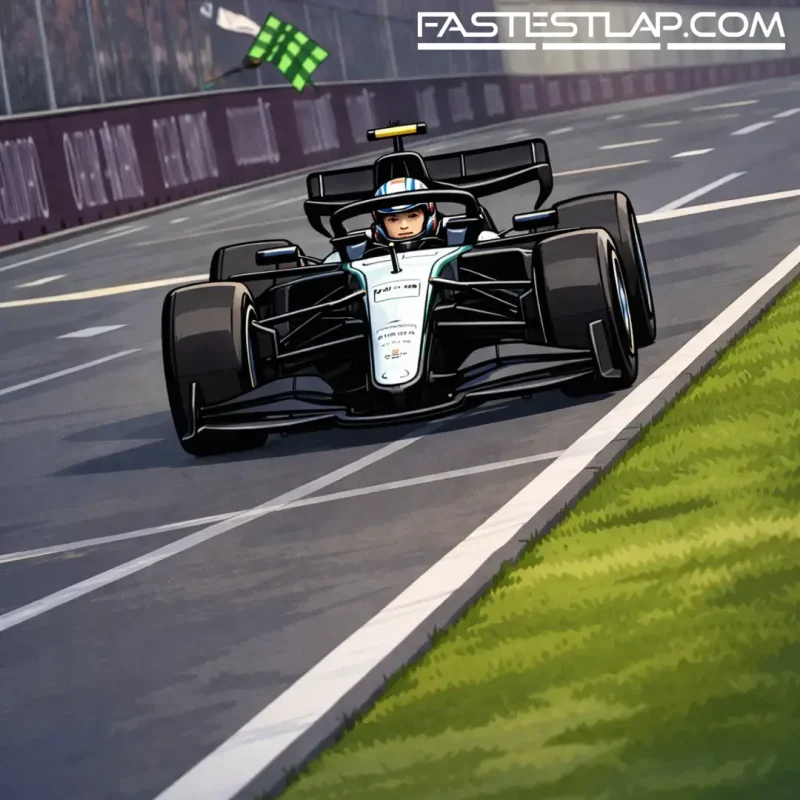
The FIA has moved quickly, issuing a technical directive that effectively kills a trick understood to have been used by Mercedes- and Red Bull Powertrains-powered cars. The idea was simple in concept, aggressive in execution: keep maximum electrical deployment running for longer as you approach the timing line on a push lap, then accept the penalty of an MGU-K shutdown period that lasts around a minute.
In other words, you steal performance in one very specific window — and then you pay for it in the most vulnerable phase of any lap, when you’re off-throttle, managing traffic, or trying not to get mugged by someone who isn’t carrying the same self-inflicted handicap.
Antonelli said the quiet part out loud after Japan: it made him a “sitting duck”. He’s right, and not just in the obvious “someone might pass me” sense. In 2026, with energy management baked into every lap and the margins between “attack” and “exposed” already thinner than teams would like, anything that creates a predictable lull in power becomes a safety question as much as a sporting one. If a car abruptly loses deployment on a straight while another is arriving at full chat, you don’t need to be a strategist or an engineer to see where the awkward moments begin.
The interesting detail isn’t that the FIA intervened — it’s how quickly it did, and how that speed is shaping the bigger political weather around 2026.
Because this isn’t happening in isolation. Monday’s high-level meeting produced a set of tweaks to the 2026 rules, mostly centred on energy management and safety, and they’ll be in play as soon as Miami. That timeline matters. When the governing body starts making midstream adjustments this early in a new regulatory cycle, it tells you two things: first, teams have found the edges faster than expected; second, the FIA doesn’t want the championship narrative dominated by loopholes, ugly driving artefacts, or power-unit oddities that play badly on TV.
James Vowles, notably the first team boss to go on the record about the changes, called them “sensible”. That’s not throwaway praise. Vowles knows as well as anyone that the worst outcome for a rules reset is the paddock spending its first season firefighting unintended consequences, forcing late fixes that satisfy nobody and introduce new problems.
It’s also a quiet rebuttal to the pre-meeting anxiety Toto Wolff voiced, warning F1 not to take a “baseball bat” to the regulations. The compromise tone coming out of Williams suggests the FIA is pitching this as refinement, not panic — a nudge back toward the spirit of the rules rather than a rewrite of the concept. If you’re a team principal, you can live with that. If you’re an engineer who’s just had a clever solution taken away, you probably won’t love it, but you’ll understand the direction of travel: keep it competitive, keep it safe, keep it readable.
Still, once the FIA starts drawing lines, everyone watches where the ink lands. A technical directive doesn’t just shut down one trick; it sends a message about how the grey areas will be policed from here. That has a chilling effect on the next idea sitting on a laptop in Brackley, Milton Keynes, or anywhere else — and it can subtly reset the competitive map if one group had leaned harder into a particular approach.
Away from the technical trench warfare, the driver market and the power dynamics behind the pit wall continue to rumble. Jos Verstappen has claimed McLaren’s move for GianPiero Lambiase is driven by money — “a lot of money”, in his words — after Max Verstappen himself described the offer as “fantastic”. Lambiase, Red Bull’s long-time engineering lynchpin on Verstappen’s side of the garage, is set to join McLaren as chief racing officer no later than 2028.
The exact motivations are always more layered than anyone admits in public, but the optics are unmistakable: McLaren is acting like a team that intends to stay at the front, investing not just in drivers and hardware but in the operational brains that turn fast cars into titles. When a squad can tempt a figure as central as Lambiase into switching colours, it tells you their project has gravity — and budget — that even the most stable organisations can’t ignore.
And while all of that is swirling, McLaren’s lead man is collecting the kind of off-track recognition that only comes with properly arriving at the sport’s top table. Lando Norris has been named Laureus Breakthrough of the Year after his first world championship last season, a title he clinched in a three-way scrap that went down to the wire. Beating Max Verstappen by two points is the sort of margin that leaves scars and confidence in equal measure — for everyone involved.
So yes, Tuesday’s headlines looked like a grab-bag: a banned deployment trick here, a rule tweak there, a high-profile staffing raid, an awards-night nod. But they’re all part of the same early-season story of 2026: F1’s new era is still settling, the FIA is already refereeing the sharpest edges, and the teams with serious ambitions aren’t waiting around to see how it plays out. They’re pushing — sometimes too far — and the sport is responding in real time.