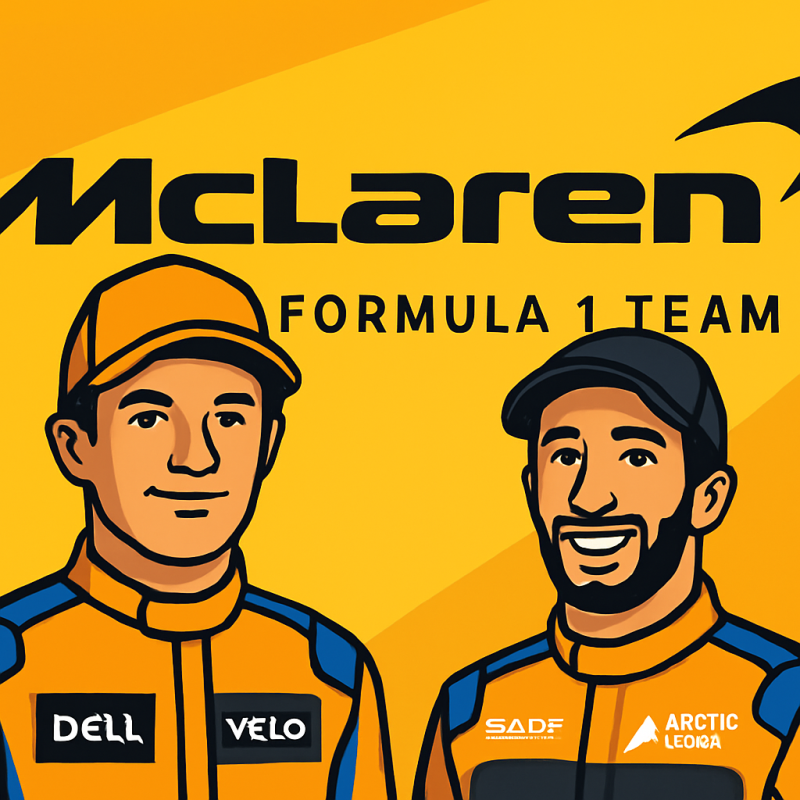
Headline: From pawn tickets to powerhouse: McLaren’s $5bn valuation seals an era-defining turnaround
McLaren Racing has just put a dollar sign on its comeback story, and it’s a big one. The minority stake sale that saw MSP Capital Partners exit the team has valued McLaren at more than £3.74 billion ($5bn) — a staggering leap from where the group stood five years ago, and a figure that places the Woking outfit among the most valuable properties in global sport.
MSP’s piece of McLaren, initially bought in 2020 as the team lurched through a cash crunch, was offloaded to existing shareholders Mumtalakat and CYVN Holdings. The reshuffle leaves McLaren Racing fully controlled by those two, with CYVN maintaining a non-controlling interest. It also leaves MSP with what’s believed to be the biggest return for an institutional investor in sports history: a 10x uplift after entering at a valuation of roughly £560 million and exiting at a number north of £3.74bn.
If it sounds improbable, remember where McLaren was in 2020. The pandemic kneecapped McLaren Automotive, sales cratered, and the wider McLaren Group cut around 1,200 jobs, including roughly 70 on the racing side. Programmes were shelved, £75m worth of savings were scraped together, and the company still needed something in the region of £300m to steady the ship. The plan to raise £275m against the Woking HQ and the heritage car collection even ended up in court as creditors pushed back, the kind of alarm bell that clangs through a boardroom.
That summer, the lifeline arrived: an unsecured £150m loan from the National Bank of Bahrain (owned by Mumtalakat), and the sale-and-leaseback of the McLaren Technology Centre for £170m. The £320m injection didn’t just keep the lights on; it bought valuable time for Zak Brown to do what he does best — sell the vision.
By December 2020, MSP Capital Partners had arrived as a dedicated investor in McLaren Racing, taking an initial 15% stake that grew to 33% by the end of 2022. The move coincided with Formula 1’s financial regulations bedding in under the 2021 Concorde Agreement, a structural shift that has made teams more like proper franchises: cost-controlled, predictable, and investable. For McLaren, it was the end of a negative spiral and the start of a sharper commercial era.
On track, the turnaround has been just as conspicuous. After years of rebuilding, McLaren emerged as the sport’s benchmark last season, winning the Constructors’ Championship for the first time since 1999. In 2025, they’re on course to defend it, and the Drivers’ Championship is currently a McLaren-only argument, with Oscar Piastri holding a 34-point advantage over teammate Lando Norris and nine rounds to go. That combination of competitive credibility, brand power, and a swelling fanbase has turned what was a distressed asset into a blue-chip.
The numbers tell their own story. MSP’s 10x exit underscores how the cap and the sport’s booming popularity have reframed F1 team ownership. A $5bn price tag isn’t just about silverware; it’s about stability, media reach, and the long tail of a team that can compete at the front while operating within a sustainable business model. Investors who once saw F1 as a passion play now see a maturing marketplace with strong governance and scarcity value.
It also closes a chapter. MSP was a key character in McLaren’s recent history, part of the reason the team didn’t slide into insolvency when the world shut down. Its exit, and the consolidation under Mumtalakat and CYVN, suggests a cleaner, longer-term capital structure for McLaren Racing. The message is obvious: the team is no longer raising money to survive; it’s optimizing to win.
None of this was guaranteed. In 2020, McLaren was contemplating loans secured against a trophy cabinet that had become a memory box. Five years later, it’s a $5bn business with the reigning constructors’ crown, two title-contending drivers, and an ownership group that believes the ceiling is still higher. MSP, for its part, isn’t ruling out a return to the paddock if the right door opens. In F1’s new era, there will be plenty of knocks.
As for McLaren, the transformation isn’t just about numbers. It’s about turning crisis management into competitive momentum, and leveraging a modern F1 framework to make that stick. Woking has its swagger back — and this time, the balance sheet agrees.