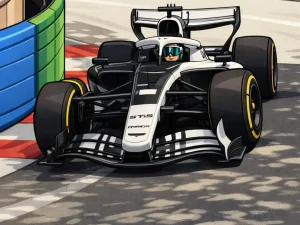
Oscar Piastri reckons Formula 1’s first round of 2026-era “tidying up” could finally steer qualifying back towards something that looks and feels familiar — and, crucially, fair.
After a run of grands prix where drivers have been forced to think as much about where the battery is doing its work as where the car is actually fast, the FIA has moved quickly. From Miami onwards, teams will be working with a reduced maximum energy recharge allowance over a qualifying lap — down from 8MJ to 7MJ — while peak “super clip” power rises from 250kW to 350kW, a change that will also apply in races.
The intent is pretty clear: less incentive to play games with harvesting and deployment, more encouragement to drive the lap in a consistent, flat-out manner. And, from McLaren’s perspective, it can’t come soon enough.
Lando Norris has been blunt about what he feels has been lost in this new qualifying landscape. The fundamentals are still there — braking late, getting to throttle early, carrying speed — but he argues the sharp edge has been dulled. That last one or two per cent, the bit where a driver decides to lean on the car just a touch more than the next guy, is harder to access when the lap is effectively fenced in by energy targets and penalties.
What’s made it especially frustrating, Norris said, is the strange inversion of reward and punishment. A small mistake can sometimes work in a driver’s favour because it inadvertently saves energy, which can then be redeployed where it matters more. Conversely, doing the “right” thing — nailing a corner, getting the car rotated, picking up throttle a fraction earlier — can leave you paying for it down the next straight if the system decides you’ve burned through the lap’s allowance too aggressively. He pointed to China as a case in point: more grip, earlier throttle… and then what felt like an absurd straight-line hit.
Piastri didn’t exactly disagree. If anything, he’s been more candid about the absurdity of it in practice: “Every qualifying session so far one of us has made a mistake somewhere, and actually it’s helped us rather than hurt us,” he said. “Which is not how it should be.”
That, more than any romantic notion of “the special feeling” of a qualifying lap, is the bit that will have made the rule-makers twitch. Fans can debate the aesthetics. Teams can live with adaptation. But when the incentives get scrambled — when a lift or a wobble can become a performance gain — it stops being an optimisation problem and starts looking like a loophole hunt.
Piastri’s hope is that the FIA’s recalibration will “go a way to solving” those issues, even if it doesn’t completely erase them. The key, as he frames it, is freeing drivers from the strangest of the restrictions: situations where you’re effectively punished for driving a corner properly.
Suzuka provided a particularly stark example. Piastri explained that McLaren — like many teams — concluded the fastest way through the Degner section in qualifying was counterintuitive: don’t get back on the throttle between the two corners. Not because the car couldn’t, but because the energy consequences of doing so were too costly relative to the lap’s overall deployment plan.
And that created its own kind of risk. If you already know you can’t use throttle to fix a slightly undercommitted entry, you have to be even braver on the way in. The irony isn’t lost on him: the rules can make certain spots more daring, but for reasons that feel artificial, and with an underlying sense that you’re driving to satisfy a spreadsheet rather than the track.
“Obviously, we shouldn’t be having that debate in the first place,” Piastri admitted — before adding that the Miami tweaks should make it “a little bit more back to normal.”
Miami will also serve as a cleaner test environment for the changes because the FIA has extended Friday’s sole practice session to 90 minutes. With the event remaining a Sprint weekend, that extra half-hour is a nod to reality: teams need more time to map the revised energy parameters, explore trade-offs, and arrive at a qualifying approach that doesn’t leave drivers second-guessing themselves at 200mph.
Whether it actually restores the “pure” qualifying lap Norris is talking about is another matter. The reality of 2026 is that energy management is baked into the concept. Drivers will still have to place the car on the limit — but, as Piastri put it, the limit now comes with more constraints than before.
The immediate question for Miami, then, isn’t whether the fastest drivers will still end up at the front — they will. It’s whether the route to pole position makes intuitive sense again. If you nail a corner, you should be faster. If you make a mistake, you should pay for it. That’s not nostalgia; that’s the baseline contract of qualifying.
McLaren, at least, sounds quietly relieved that someone in authority has been listening. Now comes the harder part: making the fixes work on track, under pressure, with everything at stake and the clocks ticking down to zero.