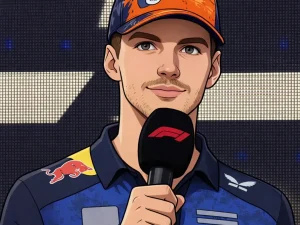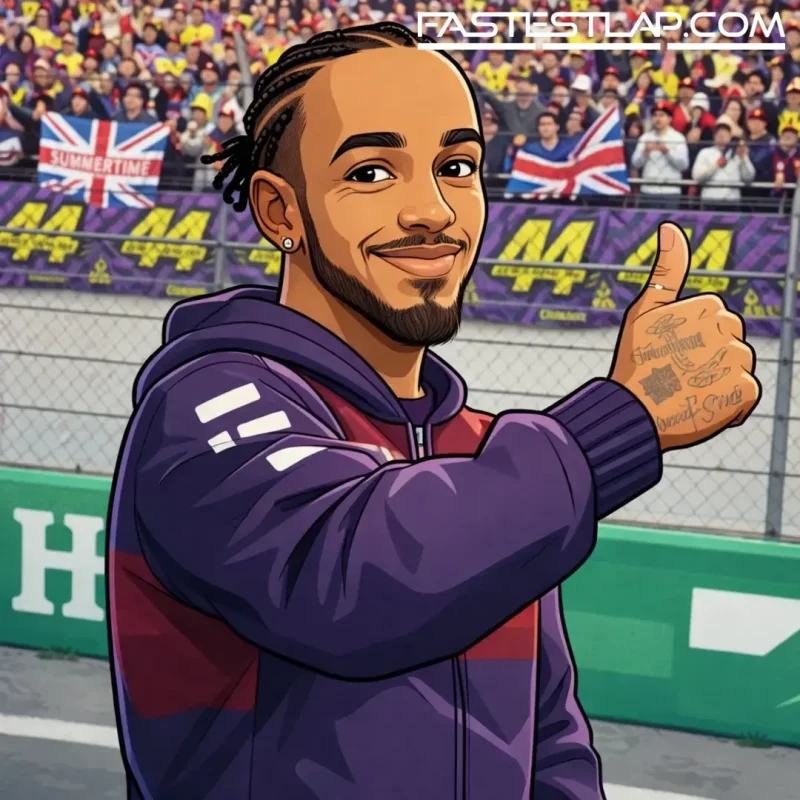
Lewis Hamilton doesn’t sound like a man tolerating a rule change. In Suzuka, he spoke like someone who’s genuinely enjoying what 2026 has done to Formula 1 — and, whether he meant to or not, his comments also doubled as a neat little commentary on why Max Verstappen is so publicly miserable with it.
The contrast has been one of the early themes of this season. Hamilton has been refreshingly upbeat about the new-generation cars, calling them lighter, more nimble and — crucially — more enjoyable in wheel-to-wheel situations. Verstappen, meanwhile, has been the grid’s loudest critic, to the point that after the Japanese Grand Prix he openly confirmed he’s weighing up walking away from F1 at the end of the year.
Asked in Japan why he seems to be “loving” this era while Verstappen plainly isn’t, Hamilton didn’t try to psychoanalyse his old rival. But he didn’t exactly dodge the obvious, either: Verstappen has spent the last four or five seasons in a world where the front of the field was his natural habitat, and 2026 has arrived with a much less comfortable reality for Red Bull.
“I don’t know if you would use the word love,” Hamilton said. “I’m just saying that I’m enjoying racing. Naturally, when you have a good car and you’re competitive, it’s nice to be at the front. He’s had that for the last four or five years. It’s been pretty smooth sailing for him, and this is the first year it’s not been.
“But I can’t answer that, that he’s not enjoying it as much.”
Hamilton’s point lands because it’s the one nobody in the paddock really needs spelling out: it’s a lot easier to embrace a new formula when it gives you something to fight for. This season has offered Hamilton exactly that — proper races, visible jeopardy, and a Ferrari that can put him in the conversation often enough to make the grind feel worthwhile.
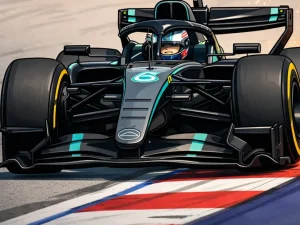
He’s also candid enough to admit the new machinery isn’t perfect. Hamilton doesn’t particularly like the power deployment, and he’s not a fan of Straight Mode either. Yet he still sees the bigger picture: a sport riding a commercial high, drawing huge audiences, and — in his view — finally delivering races that aren’t just long, glossy parades.
“As a whole, I think it’s exciting for the sport,” he said. “In a time where the sport is the highest… visually, brand wise. It’s the most income it has ever had. The Formula 1 movie has done amazingly. Got an Oscar.
“It’s just in a really good time where a lot of people are watching, and we’re actually having some battles, as opposed to processions, where you’re just watching cars pull each other around each time.”
That’s Hamilton speaking as a racer, but also as someone who’s lived through multiple cycles of “this is the future” regulation resets — and understands that the first season of any new era is always a mixture of promise and compromise. His view isn’t that the rules are flawless; it’s that the racing is giving something back.
Verstappen’s position is different, and not only because Red Bull’s start to 2026 has been described internally and externally as disappointing. His complaints about the direction of the rules pre-date this year — he was already raising concerns in 2023 — and he’s repeatedly insisted his frustration isn’t rooted in performance. He simply doesn’t enjoy this version of Formula 1, and he isn’t dressing it up with the usual corporate varnish.
Hamilton, though, gently underlined the other reality drivers rarely admit out loud: motivation is a fragile thing when you can see where a season is heading.
“Everyone’s going to have an opinion, every time you change a car,” he said. “If our car, all of a sudden, turns to a nightmare to drive, maybe it won’t be this enjoyable, but the fact is, we’re having a good fight, in with a chance, to fight for wins.
“When you’re not in the position to, and you can see… because you’ve been here a long time, you can see that that’s highly unlikely in the year, it’s very hard to stay motivated.”
He even related it back to his own recent experience of grinding through a year where wins weren’t realistically on the table.
“I was trying to do that last year, even though we knew that we weren’t developing and we had no chance of really winning,” Hamilton said. “And it’s tough for everybody within the team, but that’s a part of this sport I guess.”
The subtext is hard to miss. Drivers can insist performance has nothing to do with how they feel about the rules — and sometimes they’re right — but the emotional maths of racing has always been brutal. Fighting at the front smooths over a multitude of irritations. Struggling in traffic magnifies every one of them.
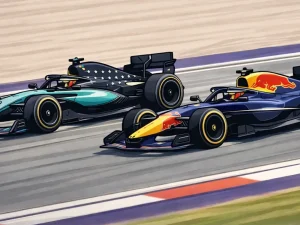
Early results have only sharpened the comparison. Mercedes has won every grand prix so far in 2026, while Ferrari has been a constant presence on the podium. Charles Leclerc has finished third in Melbourne and Suzuka, and Hamilton bagged his first Ferrari podium in China. It’s not dominance, but it’s relevance — and in a new era, relevance buys patience.
Whether Verstappen’s disillusionment turns into an actual exit threat is another question, and one the paddock will keep circling until either Red Bull turns its season around or Verstappen dials back the rhetoric. For now, though, Suzuka offered a clearer snapshot than any press release could: one multiple champion is leaning into the change, the other is pushing back against it — and the sport, as ever, is asking both to live with the consequences.