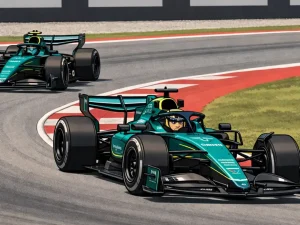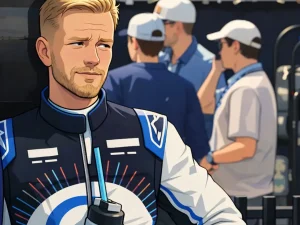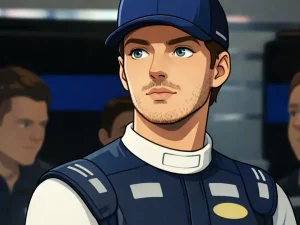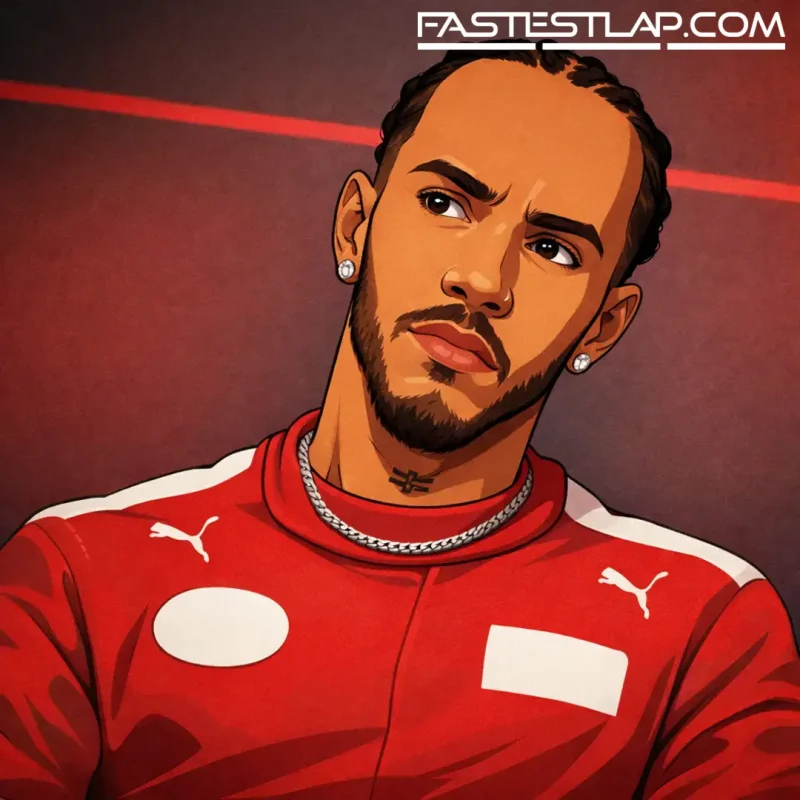
Lewis Hamilton doesn’t often do pantomime in the cockpit, but Miami managed to draw it out of him.
Untelevised footage from the 2026 Miami Grand Prix has surfaced showing the Ferrari driver making his feelings unmistakably clear towards Franco Colapinto after the pair came together on the opening lap. As Hamilton swept past the Alpine later in the race, he briefly removed his right hand from the wheel and raised his middle finger in Colapinto’s direction — a rare, very human flash of irritation in a season where margins are tight and patience even tighter.
The backstory is the sort of first-lap chain reaction drivers complain about for days. Hamilton had already been forced into avoiding action at the start in the wake of Max Verstappen’s spin, losing momentum and track position in the process. Moments later, at Turn 11, Colapinto made contact with Hamilton’s Ferrari, leaving Hamilton with damage that would define the rest of his afternoon.
Hamilton’s frustration wasn’t just theatre. He reckoned the hit cost him a significant chunk of performance — around half a second per lap — through a loss of downforce, the kind of damage that doesn’t always look dramatic but quietly bleeds you to death over a stint. It left him “in no-man’s land”, circulating with compromised pace and limited strategic options, trying to salvage what he could from a car that no longer behaved the way it had on the way to the grid.
“I was really unlucky to get caught up with Max’s spin and obviously lost positions from there,” Hamilton said afterwards. “And then I got damage from Franco and that lost me a ton of downforce. I was in no-man’s land after that.
“Not much to say. I lost about half a second of downforce on the car and I was just driving around for nothing really, trying to get as many points as I could with the damage.”
Still, even in damage-limitation mode, Hamilton managed to finish sixth — one place ahead of Colapinto on the road — which gives you a sense of how strong he felt Ferrari’s package was in Florida before it all went sideways.
In fact, Hamilton was adamant Miami could’ve been far more than a points grab. The car, he said, had come alive as the weekend progressed, particularly by the time the team rolled to the grid. It’s the sort of claim drivers don’t always make unless they genuinely believe a win was in play — and it also explains why the Turn 11 contact seemed to hit a nerve.
“I think we progressed going into qualifying and the laps to the grid felt really strong,” he said. “I was already feeling like: ‘We’re going to be strong in this race.’
“And then, obviously, with the damage [I couldn’t capitalise on it]. And it’s the worst when it happens on Lap 1 as well because there’s just nothing you can do. You’re just a passenger.
“Honestly, without the damage, I think we would have been right up in the fight. The car was feeling good on the laps to the grid. So it’s a shame because it doesn’t really truly reflect the hard work that the team has done.”
It’s also worth noting the broader context of Ferrari’s day: Colapinto ultimately ended up classified seventh — not because he was passed back on track, but because Charles Leclerc was hit with a post-race penalty that promoted the Alpine driver a position. For Colapinto, it turned a strong Sunday into the best result of his F1 career.
And from Alpine’s side, that’s the key point. While Hamilton was fuming about what might have been, Colapinto sounded like a driver who finally feels he’s put a complete weekend together at this level. Since arriving in Formula 1 with Williams in 2024, he hasn’t lacked speed, but the “full package” weekends — clean execution in every session, tidy decisions, no messy compromises — have been harder to come by. Miami, in his telling, was different.
“I think since I got to F1, it’s been my most perfect weekend,” Colapinto said. “I am very happy with the weekend. It’s been executed really well. I think we maximised every session and we scored strong points.
“So it’s been a weekend for all of us to be very proud and we’ll try to do better in Canada.”
Asked whether that step forward was down to him settling in or the car coming to him, Colapinto didn’t pretend it was solely a driver epiphany. Alpine brought new parts — including new wings and a new chassis — and he was quick to credit the team for giving him something he could lean on.
“I feel very similar, to be honest. On my side, not much changed,” he said. “But I’m just very grateful for the team for all the new bits, the upgrades, the new wings, the new chassis that came.
“It’s all been very helpful and I think that really helped me find my feet a bit better and find my pace.”
So you’ve got two drivers walking away from the same incident with completely different emotional takeaways: Hamilton stewing over a win he believes slipped away on lap one, and Colapinto buoyed by a career-best result and a weekend that felt — to him, at least — like a turning point.
As for the gesture? It’ll get the clips shared and the reactions farmed, of course it will. But in a sport where drivers spend most of their public time sanding down their own edges, it also told you something simple: Miami mattered, and for Hamilton it mattered enough to make it personal — if only for a second on the back straight.