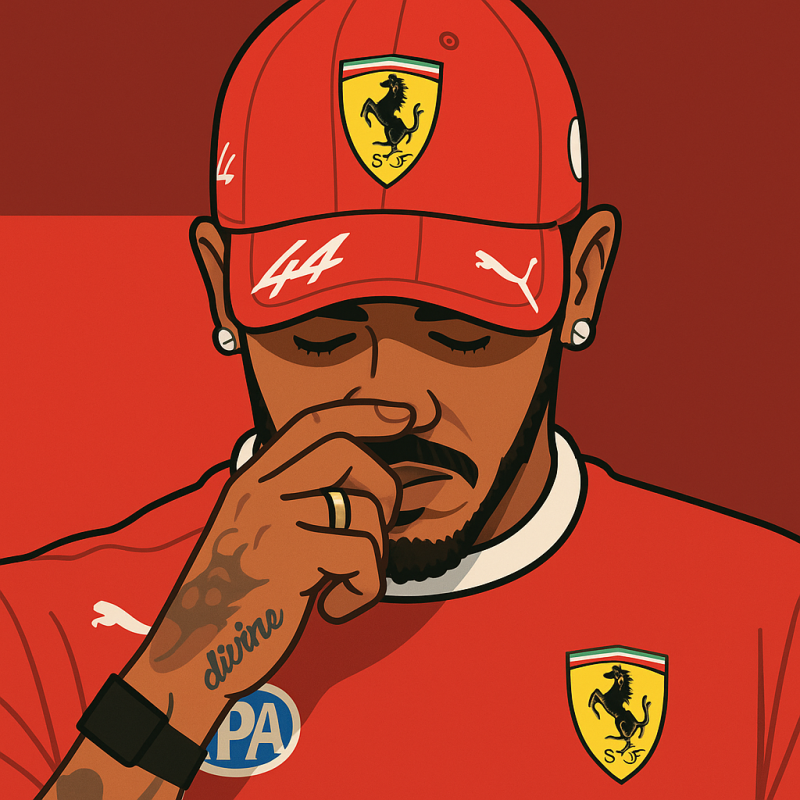
Jolyon Palmer isn’t buying the “Hamilton’s finished” narrative. To him, Ferrari’s new signing is suffering death by a thousand cuts, not a terminal decline.
Hamilton’s first half-season in red has been messy, no doubt. He’s sixth in the standings on 109 points, with only two scoreless Sundays — the China disqualification and the Hungary blowout — blotting the copybook. The bigger bruise is qualifying. Too many Saturdays have started on the back foot, forcing a rescue act 24 hours later. Hamilton even called himself “useless” at one point. It made headlines. It also made Palmer wince.
On F1 Nation, the ex-Renault driver and F1TV analyst walked through the evidence. Start with the teammate. Charles Leclerc, he says, is “frighteningly quick” over a lap and, in Palmer’s view, still underrated on Sundays. That’s a high bar to measure against every week, in a car that’s proved sharp but skittish when the window isn’t perfect.
Then look at the qualifying near-misses. Silverstone? Hamilton looked like the old assassin after Ferrari’s floor tweak, up on Verstappen into the final complex before a tidier exit would’ve stuck him on pole. Spa? On paper, a shocker. In reality, there was time in hand — until oversteer at Stavelot and a Bus Stop spin unraveled it in the Sprint segment, followed by a deleted lap over the top of Raidillon in qualifying proper. Budapest? Ferrari suddenly found the sweet spot in Q3, and Hamilton was the one left scrapping on the outside as Leclerc nicked pole. We’re talking tenths, not chasms.
“We’re just not used to Lewis making these sorts of mistakes,” Palmer argued, suggesting the one-lap pressure is amplifying every error. Put those tiny details back in place and the results stop looking so “abject” for a seven-time champion.
There’s also the Ferrari factor. The badge is heavy. The expectation is heavier. Palmer’s reminder: it’s hardly impossible to thrive in red without a title parade. Fernando Alonso and Sebastian Vettel both won races there; they simply never closed the final chapter. Hamilton can get to that level, he reckons — and once the rough edges are filed off, there’s no reason the wins can’t follow.
This isn’t a rewrite of Hamilton’s legacy. It’s a reboot he hasn’t quite synced yet. Clean up Saturdays, ease the forcing on out-laps, and the Leclerc benchmark stops looking like a wall and starts looking like a target. The speed’s in there. The margins, for now, are what’s beating him.