Ferrari’s missing Lauda? Inside Hamilton’s uneasy start in red
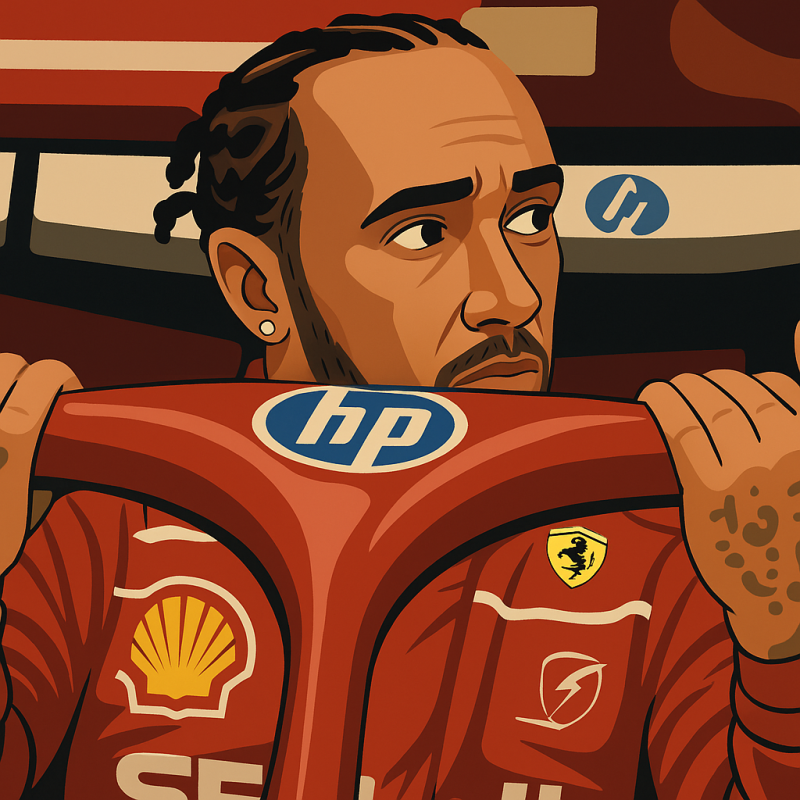
When Lewis Hamilton signed for Ferrari, the sport braced for romance: a seven-time champion in scarlet, chasing one last heist. What it’s got, months on, is a very different picture — gritty, uncomfortable, and increasingly public. And inside Maranello, one Ferrari voice thinks the problem is less about lap time and more about translation.
Francesco Cigarini, a mechatronics engineer well versed in the politics of a grand prix garage, believes Hamilton lacks the one thing that unlocked him at Mercedes: a trusted, no‑nonsense interpreter between driver and factory. In Brackley, that was Niki Lauda.
“If you’re part of the team, you understand the dynamics that might help you understand why he says that,” Cigarini told Formula1.it when asked about Hamilton’s self‑lacerating comments this season. “From the outside, I can say that he demands a lot from himself and from those around him… one thing that worked very well for Hamilton [at Mercedes] – and which doesn’t exist at Ferrari – is Niki Lauda: someone who acts as a link between the team and the driver, conveying what Hamilton wants in a slightly less blunt manner. Someone who acts as a spokesperson and acts as a glue between the whole team and the driver.”
Lauda didn’t just hand Hamilton the keys to Mercedes in 2013; he built a safe passage. He smoothed edges, translated tone, and made sure a very particular kind of feedback landed where it needed to. The result was six more titles and an era. At Ferrari, that role simply doesn’t exist in the same way, and Hamilton — new team, new car, new culture — is feeling every inch of that gap.
The scoreboard hasn’t helped. While Charles Leclerc has stacked up podiums for the Prancing Horse, Hamilton is still waiting to step back onto one in red. Low points have felt unusually raw: after a Q2 exit in Hungary, he called himself “useless,” the kind of barb we rarely heard in his Mercedes years. You don’t need to be a body-language expert to see a driver searching for grip far beyond the apex.
Cigarini also points the finger at the SF-25 itself. Ferrari’s car, he says, is “extreme,” the sort of knife-edge platform that flatters its incumbent specialist and punishes anyone not singing in its key. “He is used to a car that behaves in a certain way… a car that gives him confidence, not as extreme as today’s Ferrari. A more solid car, more ‘honest’ in its behaviour,” he said. Leclerc, he added, is “a champion at home who has a lot of experience,” a reminder that Hamilton has walked into a team that already knows how to win Sundays with the guy on the other side of the garage.
That dynamic matters. Any top team builds around the rhythms of its lead driver, and Ferrari’s have been Leclerc’s for years. Hamilton has always been a prolific shaper of his environment — relentless, exacting, and yes, occasionally blunt. The question now is how much appetite Ferrari has to bend, and how much appetite Hamilton has to make them. “I don’t know how ambitious [he] is in imposing his way of being at Ferrari and how well or accurately it is received,” Cigarini admitted. “From the statements he makes from time to time, it’s as if he’s sounding the alarm bell.”
There’s been loose chatter about an early exit, the kind of rumour that tends to follow big names when the honeymoon ends early. Whether you take that seriously is another matter. What’s clearer is the need for a conduit — a Lauda-like voice with enough authority to push and enough touch to smooth — so Hamilton’s demands don’t get lost in translation.
The calendar offers a second chance in 2026. With new power unit and aero regs on the way, Hamilton’s experience through regulation resets is the ace up his sleeve. “Every rule change is an opportunity for someone who hasn’t been able to seize it before,” Cigarini said. The caveat is obvious and stings in Maranello’s DNA: “He needs to have an efficient car.”
Between now and then, Ferrari can still shift the narrative. Some of that is technical — broadening the SF-25’s operating window, dialing out the bite that’s catching Hamilton off guard — and some of it is human. Give him a voice in the room that isn’t his own. Call it a consigliere, a translator, a bridge. Call it what Lauda was.
Hamilton didn’t go to Ferrari for a pleasant endnote. He went to write a new chorus. Right now it sounds off-key. But we’ve seen this driver storm back from messy beginnings before. If Ferrari can meet him halfway — on car and culture — the red‑suited story everyone wanted in January might yet find its rhythm.