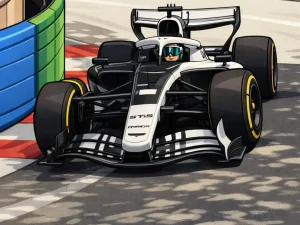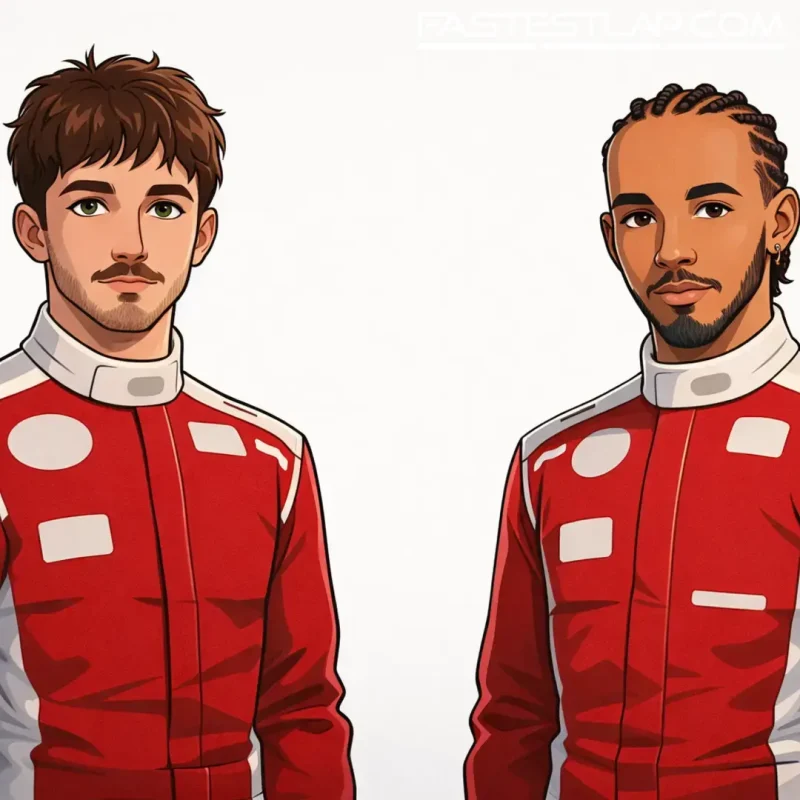
Ferrari’s started 2026 with the sort of early-season consistency Maranello has spent the past few years chasing: three races, three podiums, and none of the frantic damage-limitation tone that hung over so many Sundays in 2025. And yet, in the same breath, they’re being framed as the first “loser” of the new campaign — not because they’re failing, but because Mercedes’ baseline has immediately reset the scale of what “good” looks like.
That’s the uncomfortable space Ferrari now inhabits in year two of the Charles Leclerc–Lewis Hamilton partnership. They’ve clearly moved on from a winless 2025, but the early evidence says they’ve improved into someone else’s era rather than their own. In F1 terms, it’s the cruellest kind of progress: tangible, measurable, and still not enough to control your destiny.
There’s a broader theme running through the paddock as the season heads towards Miami: the teams that best understood the new world have built margin into their weekends, while everyone else is forced to spend Friday and Saturday bargaining with the car. Ferrari’s podium run suggests they’re doing more right than wrong — but the fact they can be praised and dismissed in the same sentence tells you how tight the top order feels in 2026. If you’re not the reference, you’re a story.
Aston Martin’s story, meanwhile, is much less flattering and far more mechanical. Honda has confirmed it’s working “closely” with the team to “enhance our countermeasures” as it continues to chase down an engine vibration problem. The language matters: countermeasures implies mitigation, not a cure, and that tends to be how power unit issues linger — managed rather than solved, contained rather than eliminated.
The fix Honda introduced around Japan clearly brought some encouragement. Fernando Alonso spoke of an “80 per cent improvement”, which is exactly the kind of number that sounds decisive until you remember the final 20 per cent is usually where reliability lives. Aston Martin chose not to race the Suzuka-spec updates due to concerns over durability, and that choice tells you plenty about where confidence actually sits. In 2026, when the margins are already thin and the calendar is relentless, you don’t get many free weekends to run experiments in public.
Away from the lap time, there’s movement in the boardroom too — and it’s drawing attention because it always does. Interest in Otro Capital’s stake in Alpine has pushed team ownership back into the spotlight, a reminder that Formula 1’s current boom isn’t just a sporting story, it’s an investment one. The grid looks stable on TV, but the structures behind several teams remain a patchwork of manufacturers, holding groups, private equity and legacy stakeholders. The sport likes to sell continuity; the balance sheets often tell a different tale.
There was a more personal note in the day’s news as Heikki Kovalainen shared images of the scar left by open heart surgery, two years after undergoing the procedure. Kovalainen spent nine days in hospital in 2024 after being diagnosed with an ascending aortic aneurysm — a phrase that still lands with a cold weight no matter how many times you read it. That he’s now comfortable enough to share the reality of it, visually and without drama, is quietly powerful. In a sport that tends to frame drivers as either indestructible or broken, the in-between — recovery, normality, the long after — rarely gets airtime.
And then, inevitably, the politics of what Formula 1 is supposed to be returned to the foreground. Jos Verstappen has added his voice to the criticism of the 2026 regulations, saying he sometimes “switches the TV off” because of his lack of interest in what the sport has become. It’s a striking comment not just because it’s blunt, but because it echoes the tone Max Verstappen himself has set: scepticism, frustration, and at times a sense of emotional distance from the direction of travel.
The elder Verstappen’s line — “It’s not the Formula 1 that Formula 1 stands for” — is the kind of quote that will travel. It captures a wider tension that’s been simmering since the new rules package arrived: some see evolution and opportunity; others see dilution. The tricky part for F1 is that both camps can be right, depending on what you think the sport’s core promise is.
What’s certain is that 2026 is already shaping narratives quickly. Ferrari’s early podiums feel like proof of competence, but also a warning: in a new era, being better than you were last year doesn’t automatically make you a contender. Aston Martin’s Honda-linked headaches underline how brutally technical the learning curve still is. Alpine’s ownership chatter is a reminder that teams don’t only fight on track. And the Verstappen critique — from father and son — hints at a bigger question F1 may have to answer all season: not whether the new rules work, but whether they *feel* like the pinnacle to the people who’ve lived it most intensely.