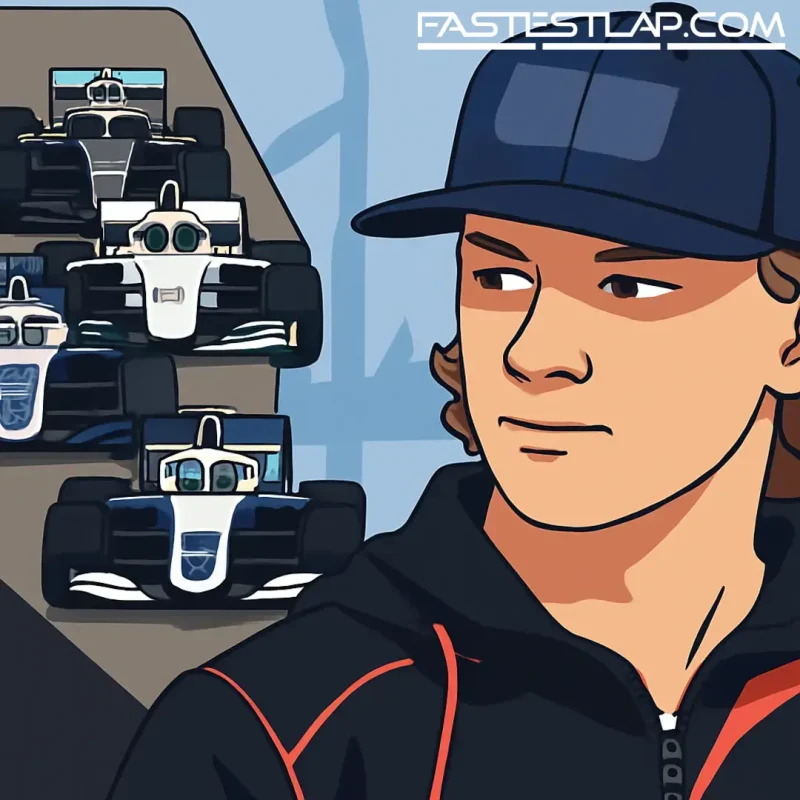
Kalle Rovanpera is walking away from rallying’s summit to chase the sharp end of single-seaters. The two-time World Rally Champion will swap stages for slicks in 2026, committing to Japan’s Super Formula with Toyota backing and, if all goes to plan, a move into Formula 2 the following year.
It’s the boldest career pivot motorsport has seen in years. At 25, with 17 WRC wins and the sport’s youngest-ever champion tag already in his pocket, Rovanpera has decided he’s not done collecting firsts. In an open letter to the rally world, he called time on WRC to pursue what he described as the highest level of circuit racing, thanking Toyota Gazoo Racing for the ride and making it clear this wasn’t a whim. He’s been plotting this for a while.
The destination? Super Formula — Japan’s ultra-quick, razor-edged spec series that sits closest to Formula 1 on the performance ladder. The Finn will stay within the Toyota family on a multi-year deal and, while he hasn’t publicly named the team, paddock expectation points to a seat with KCMG for 2026. The plan stretches further: simulator work already in motion and a testing program leading to an F2 campaign in 2027, understood to be in collaboration with Hitech.
Rovanpera hasn’t been hiding his interest in circuit racing. He sampled single-seaters in 2023, stepping through Formula 4 and Formula Renault 3.5 machinery before turning laps in a Red Bull F1 car at the Red Bull Ring. Last year he dipped into Porsche Carrera Cup Benelux as well, winning three races between WRC duties. He’s comfortable operating outside his “home” discipline. He’s also a card-carrying Red Bull athlete — and the logos have been hard to miss in his announcements.
Why Super Formula? Because it bites. The Dallara chassis, on serious tyres with Toyota or Honda power, asks proper questions of drivers on push laps and over high-deg stints, and the racing is brutally unforgiving. It’s not the default European ladder step these days, but it’s still a formidable yardstick. Recent F1 racers Pierre Gasly and Liam Lawson honed their craft there before their grand prix breaks. If you’re serious about speed, Suzuka and Fuji will tell you the truth.
Could this be an alleyway into F1? On paper, the alliances are intriguing. Toyota’s fingerprints are all over the project and that naturally steers eyes toward Haas, where a growing technical relationship with Toyota Gazoo Racing has already had public markers. The American team ran its first TPC (Testing of Previous Cars) program this year, with reigning Super Formula champion Sho Tsuboi, TGR’s Ryo Hirakawa, and Le Mans stalwart Kamui Kobayashi all sampling Haas machinery in recent months. There’s no active dialogue with any F1 team yet — and no promises forthcoming — but you don’t need a wall chart to draw the lines between Toyota, Super Formula and Haas.
Red Bull will inevitably be mentioned too. Rovanpera is one of their top-tier athletes, and Milton Keynes hasn’t shied away from unconventional talent pipelines in the past. But it’s Toyota footing most of the bill here, and the Japan-to-Haas lane currently looks the more pragmatic avenue if this story ever reaches an F1 paddock.
It’s also worth staying grounded. Rally brilliance doesn’t automatically translate to single-seater racecraft. Rovanpera’s car control is obscene on gravel at 180kph inches from a ditch; now he’s chasing tenths in qualifying windows, saving tyres in dirty air and managing restarts with DRS breathing down his neck. That said, the very best rally drivers process grip changes faster than most humans, and Super Formula is a powerful learning environment. If he blends that adaptability with mileage and a clean learning curve through 2026, the 2027 F2 season becomes the real litmus test — and the key to stacking the Super Licence points needed for F1 consideration.
There’s also the cultural fit. Toyota’s racing empire prizes discipline and preparation; Rovanpera’s move has that humming in the background. This isn’t a stunt. It’s a multi-year project with a clearly drawn path: Japan to Europe, Super Formula to F2, with simulator time and testing baked in. The timeline’s ambitious, the competition is unforgiving, and the margin for error is slim. But for a driver who was winning world titles barely old enough to rent a car in some countries, “ambitious” is the point.
If you’re looking for a comparable switch, there isn’t a neat one. Kimi Räikkönen flirted with NASCAR, Sébastien Loeb’s done pretty much everything with wheels and a stopwatch, and Max Verstappen makes eye-watering sim moves for fun. But a reigning rally megastar aiming squarely at the single-seater summit? That’s new. And it’s going to be compelling.
Bookmark 2026 for the first green flag in Super Formula. Circle 2027 to see if F2 pace arrives on command. And then, maybe, keep an eye on the F1 entry list a little longer than usual. Long shot? Of course. Worth watching? Absolutely. Don’t be shocked if the kid who rewrote WRC’s record book starts scribbling in another one.