George Russell isn’t buying Lewis Hamilton’s self‑flagellation. Not for a second.
Asked about Hamilton’s bleak assessment of his own form after a bruising Hungarian Grand Prix — where the seven-time champion dropped out in Q2 at a circuit he’s made his own — Russell was direct. The former Mercedes team-mates know each other’s rhythms, and Russell heard a driver speaking in the heat of the moment, not from a place of truth.
“Of course, he’s talking nonsense when he says something like that,” Russell said ahead of the Dutch Grand Prix. “He’s the greatest driver of all time, I think.”
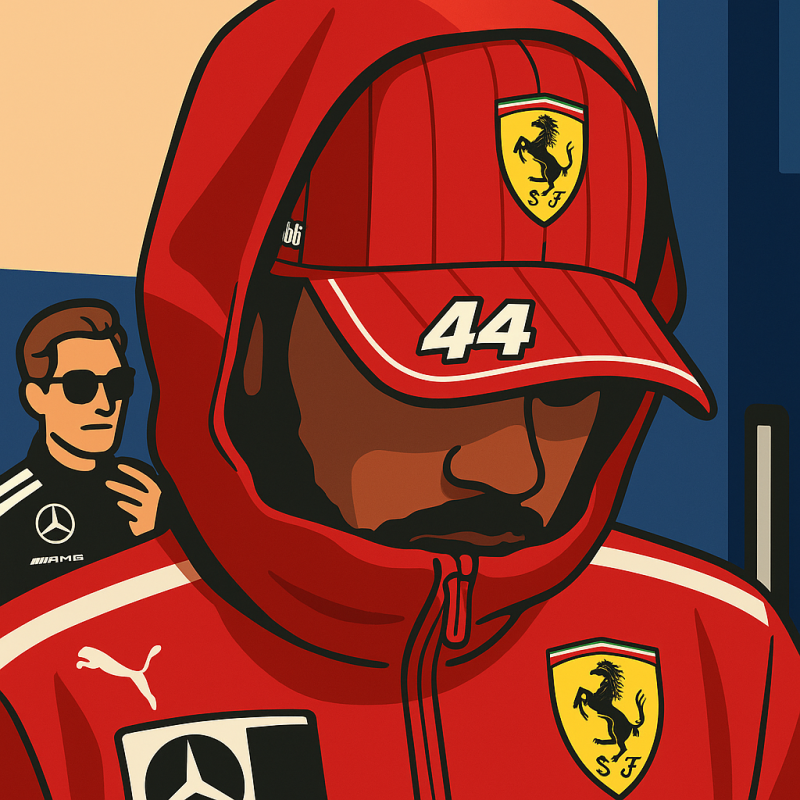
Hungary was the flashpoint. Hamilton, staring at the timing screens and finding himself out early while Charles Leclerc stuck the Ferrari on pole, let the cameras in on his frustration. “I’m useless,” he told Sky. “They probably need to change driver.” It was raw, a driver with a tongue for the dramatic twisting the knife on himself.
Ferrari’s first season with Hamilton hasn’t matched the fever of that Maranello unveiling. The Ferrari garage is Leclerc’s right now. He’s 42 points clear in the intra-team fight, and all five of Ferrari’s 2025 podiums — plus that Hungaroring pole — belong to the Monegasque. Hamilton did win the Shanghai Sprint at the start of the year, a reminder that the speed hasn’t vanished. But on Sundays, the rhythm’s been jerky, and the silverware has kept landing on the other side of the garage.
Russell, who sparred with Hamilton across three seasons at Mercedes, sounded more like a former team-mate than a rival. He knows the post-session gauntlet: out of the car, adrenaline still humming, cameras in your face within minutes. A bad session can shrink your world, and the story you tell yourself gets darker than it deserves.
“A situation like that, when you go from the racetrack and you’re in front of the media within 10 minutes, you have all of these emotions,” Russell said. “When you have a bad day, that’s how you feel. When you have a good day, everything changes.”
That same Ferrari over the wall? It’s quick. Leclerc proved it. That doesn’t mean Hamilton’s suddenly forgotten how to drive, nor that the SF-25’s window is easy to hit. Formula 1’s current cars are prickly, and if you miss the sweet spot, you’re chiselling lap time in small, reluctant pieces.
“Formula 1 is not an easy sport, and especially if the team is not performing at the highest level, that compounds the issue,” Russell added. “And of course, Charles is an amazing driver too.”
Hamilton will know all of this. He’s always been brutally self-critical — it’s part of the machinery that built 103 wins and seven titles. But the new reality is a long way from Mercedes 2014–2020. Ferrari have a fast car that teases more than it delivers; the field around them is unforgiving; and Leclerc, with years of Ferrari muscle memory, has slipped into that lead role without fuss.
Beyond the immediate noise, there’s the horizon. 2026 is coming, bringing a chassis and power unit reset big enough to redraw the map, and drivers are already eyeing it like a clean sheet. If Hamilton has occasionally felt out of sync with this ground-effect era, the rule change is the state-sponsored reset he’d circle in red.
“So I think right now, 14 races down, probably every driver, bar two, are looking forward to 2026, for a fresh opportunity to fight for a championship,” Russell said. “And for someone like Lewis, that’s what he lives for.”
Short term, Zandvoort offers its own therapy. The Dutch seaside wind can whip mood as fast as it whips sand, and the narrow banking rewards commitment. Hamilton’s Saturday in Hungary was the outlier; his Sundays have often been better than they look on paper. Ferrari’s task is to give him a platform that lets him lean on the front end and trust what’s happening underneath. His is to meet the car halfway, park the melodrama, and cash in when the sessions bend his way.
The wider paddock won’t be fooled by a few sharp words. They’ve raced long enough alongside Hamilton to know the tone doesn’t match the talent. And if Russell, now leading Mercedes in the post-Hamilton phase, is willing to throw an arm around the old guard in public, that tells you something. The respect runs deep — and so does the expectation that Hamilton’s slump is more story beat than ending.