Oscar Piastri doesn’t sound like a driver traumatised by coming close. But he does sound like someone who learned, the hard way, how brutal a title fight becomes when the car underneath you is good enough that “second” stops feeling like a result and starts feeling like a verdict.
Speaking on the High Performance podcast, Piastri described his first proper run at a Formula 1 championship as a “double-edged sword” — a season in which he spent long spells as the man to beat, only to watch the points swing away and end up third in the final standings, 13 points behind McLaren team-mate Lando Norris.
That context matters. Piastri wasn’t lamenting the usual “we’ll come back stronger” stuff. He was talking about the psychological tax of being in the best package and knowing the margins are suddenly measured in internal comparisons. When the car is competitive but not dominant, a P2 can be celebrated. When the car is the benchmark, P2 can feel like you’ve simply lost.
“At certain points last year, finishing second was almost kind of the worst place I could finish,” Piastri admitted. The reason was blunt: if you’re second in a McLaren that’s got the field covered, chances are you’ve been beaten by the other McLaren. And that does something to a driver’s internal narrative across a 24-race slog — especially when the stakes shift from podiums and progress to a single binary outcome.
Piastri’s 2025 campaign had the shape of a champion’s season early on. He led the championship by 34 points at the two-thirds mark after converting pole into victory at Zandvoort, the sort of weekend that doesn’t just bring points but resets what you believe is possible. Then reality arrived quickly: a retirement in Baku, a run of four races without a podium, and a disqualification in Las Vegas — an incident that also caught Norris, but still landed like a hammer blow in a title race where every swing gets amplified.
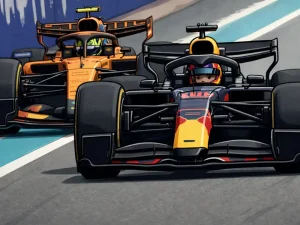
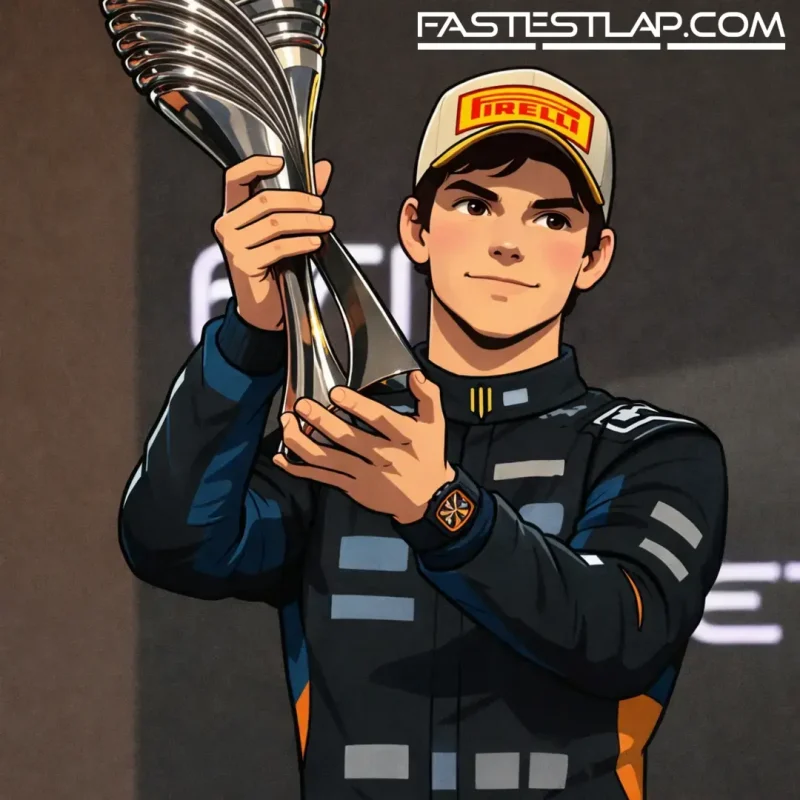
The knock-on effect was obvious by the time the circus reached Abu Dhabi. Max Verstappen surged back into contention and the whole thing turned into a three-way scrap. Norris did what he needed to do in the finale, took the podium finish that mattered, and lifted the title. Piastri, despite seven wins and nine more podiums across the year, walked away with the lingering sense that the season had slipped rather than simply been beaten out of his hands.
That’s where the “double-edged” part becomes interesting — because Piastri isn’t only describing pressure from outside the garage, but the pressure created inside your own expectations.
There’s an honest contradiction at the heart of being a contender. The confidence is real, and so is the enjoyment. Piastri acknowledges that. Drivers aren’t on the grid to “see what happens”; they’re here to win races and championships. But once you’ve proven you can do it, the sport stops being about what you might achieve and becomes about what you *should* achieve. When you’re the one leading, you can’t hide behind “learning weekends” anymore. The bar moves. And it moves fastest when the person you’re measuring yourself against is in identical machinery.
Piastri’s description of trying to take a “holistic” view is telling, because it’s not the language of somebody looking for comfort — it’s the language of someone trying to stay functional. F1 has always demanded short memory, but title fights demand selective memory: you have to be hard enough on yourself to improve, without letting every near-miss turn into a self-fulfilling spiral.
He pointed to that exact tension: knowing he “didn’t do a good enough job” on certain weekends, while still having to remind himself that he’d just finished second in a grand prix. It’s a tiny line, but it captures the whole trap of a season where you’re good enough to win and yet rarely feel like you’ve nailed it unless you actually do.
What’s also striking is how carefully he says he managed the forward-looking thoughts. Piastri insists there weren’t many moments where he let himself think, plainly, “I’m going to win the world championship.” And if that thought did surface, he says he shut it down quickly. Not because he lacked belief — more because he understood how quickly F1 punishes anyone who starts counting outcomes before they’ve banked them.
Still, he offered one revealing checkpoint: Melbourne. After that race, he says, he knew “within myself that it was within my power” to win the championship, even if he wasn’t convinced it would happen. That’s the mindset shift that separates a promising driver from a genuine contender — recognising the title isn’t a fantasy scenario, it’s an operational possibility, dependent on execution and the way the season breaks.
And that’s the point, really. Piastri’s takeaway from 2025 isn’t framed as regret; it’s framed as awareness. He’s seen what happens when a season gives you control and then snatches it back through one retirement, one poor run, one ruling, one rival’s resurgence. He’s also seen, up close, what an internal title fight does to the way you process “good” days and “bad” days.
In 2026, that experience is currency. Because the next time Piastri finds himself in that position — leading a championship, living in the margins, trading weekends with Norris and watching Verstappen (or anyone else) loom — he won’t be learning what pressure feels like. He’ll be trying to get ahead of it before it turns second place into the “worst” place again.