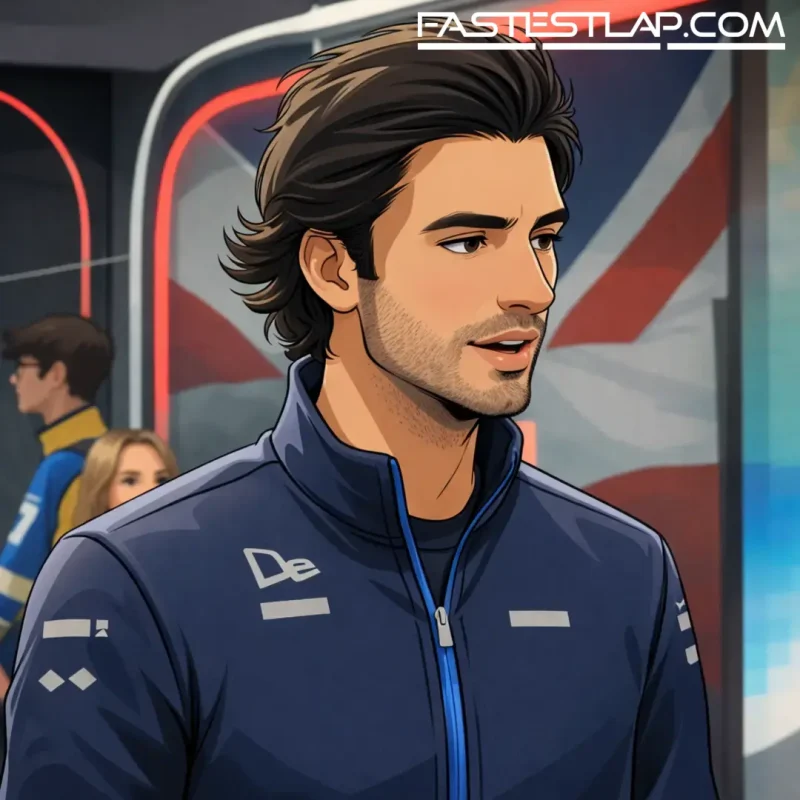
Carlos Sainz has walked away from Silverstone with one of the most extreme penalties Formula 1 can hand out — and the awkward part is it didn’t even change his points tally.
Hours after the 2026 British Grand Prix finished under the Safety Car, the FIA confirmed Sainz had been issued a one-lap penalty for overtaking the Safety Car without permission. In modern F1 terms, that’s nuclear: a sanction that sits well beyond the usual menu of five- or 10-second add-ons and grid drops. The stewards insisted it’s squarely within their powers, but it’s the sort of punishment you simply don’t expect to see in a world championship, especially for something born out of late-race confusion rather than cynical gamesmanship.
That confusion, of course, was everywhere in the closing minutes. The race ended behind the Safety Car after a muddled sequence in which the familiar “Safety Car in this lap” message appeared, apparently teeing up a one-lap sprint to the flag. At the front, Charles Leclerc was leading George Russell and Lewis Hamilton, and the field responded like it normally does when it thinks the restart is imminent: tyre temperatures, gaps, positioning — the usual choreography.
Except the Safety Car didn’t come in.
Instead, Leclerc was guided around for another tour and then effectively shepherded to the chequered flag in a controlled procession, sealing the win without the promised shootout. The FIA later described the “Safety Car in this lap” message as a software error — a remarkable admission in itself given how much the grid lives by those calls.
In the middle of that, Williams made a call that proved ruinous in regulatory terms. Sainz, car 55, overtook the Safety Car after the “LAPPED CARS MAY NOW OVERTAKE” phase — but the stewards concluded he wasn’t actually entitled to do so under the relevant clause, because of the peculiar way Silverstone’s pit lane and Safety Car lines can temporarily scramble a car’s lap status.
The stewards’ explanation reads like the kind of scenario teams dread: a technicality that becomes a trap. They said Sainz was lapped at Safety Car Line 1 when entering the pit lane, but because of Silverstone’s configuration he “had temporarily unlapped itself” by the time he crossed the line at the end of the lap. That meant, at the critical reference point under Article B5.13.4 c), Sainz was not considered a lapped car — and therefore wasn’t eligible to go past the Safety Car when the instruction for lapped cars to overtake was issued.
Then it gets messier. Race Control displayed the message, and Sainz did unlapped himself once it appeared. After his stop, he rejoined as a lapped car again. The stewards acknowledged the “exceptional track layout” and accepted how the sequence could have contributed to Williams’ confusion — but they still landed on a blunt conclusion: the team made two clear errors and “inadvertently gained a lap when they were not entitled to do so”.
The first mistake, per the stewards, was not recognising Sainz’s lap status at the reference point. The second was more basic — and the one that will sting on Monday morning in Grove: Williams failed to notice that Sainz wasn’t included in the Race Control message identifying the cars permitted to overtake the Safety Car. That’s the sort of detail teams normally treat as gospel, precisely because the sporting regulations are so unforgiving when the field is being rearranged.
The penalty itself was justified via Article 12.4.1.i of the FIA International Sporting Code, with the stewards stating they were “satisfied that the penalty lap is one of the penalties available” and that it was the “most appropriate” option in this case. In effect, they’ve leaned on the broader Sporting Code to apply a punishment that sits outside the usual rhythm of F1’s stewarding outcomes — and that alone will raise eyebrows up and down the paddock.
There’s also a slightly strange aftertaste: Sainz was initially classified 12th, so the penalty doesn’t cost him any points. But that doesn’t make it meaningless. A one-lap penalty is a scarlet letter of sorts, and it puts a spotlight on operational sharpness at a time when Williams can’t afford to look sloppy. In the same breath, it underlines how small the margin is between “following procedure” and “breaking a rule you didn’t realise applied to you”.
Silverstone’s finale was already going to be picked apart because of the FIA’s software error and the knock-on effect it had on the race’s final act. Now, it has a second chapter: a punishment so severe it feels like a relic from a different era — delivered because a team, amid a flurry of contradictory signals, got caught on the wrong side of an obscure reference point.
In 2026 F1, where everyone is wired into live data and automated messaging, that’s an uncomfortable reminder: the sport is still capable of tripping over its own systems — and when it does, the consequences don’t always land evenly.