Max Verstappen’s first Nürburgring 24 Hours was shaping up to be the sort of side-quest victory that only adds to the aura — a big-name F1 champion dropping into endurance racing, setting a ruthless pace, and walking off with one of the sport’s most unforgiving trophies.
Instead, it ended with that familiar endurance-racing gut punch: a strong car, a comfortable lead, and then a mechanical problem that doesn’t care who’s in the cockpit.
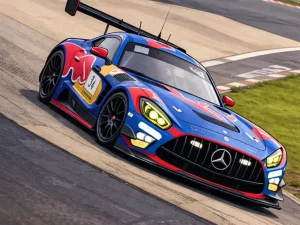
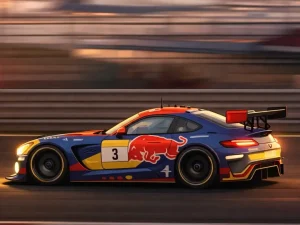
Verstappen’s #3 Mercedes had control of the race before trouble arrived with less than four hours remaining. The car made it back out later in the closing stages, but the damage was already done. It eventually trailed home a dispiriting 38th, 21 laps down on the winner after 156 laps of the Nordschleife marathon.
Up front, it was another Mercedes crew — the #80 car shared by Maro Engel, Luca Stolz, Fabian Schiller and Maxime Martin — that kept things clean and claimed the win.
Mercedes-AMG’s head of customer racing Stefan Wendel confirmed a driveshaft issue was at the heart of Verstappen’s heartbreak, with the sequence beginning as a warning and quickly escalating into something more serious.
“We’d received an ABS warning, but Daniel Juncadella said he could manage it,” Wendel explained. “However, noises and vibrations then started, so he had to make an unscheduled pit stop after two laps.”
That detail tells you plenty about how these races turn: what feels manageable for a lap or two at the Nürburgring can morph into a terminal problem before you’ve even had time to reset your expectations. The fact the car returned at all speaks to the team’s effort — but in a 24-hour race, “back out” is often just a different way of spelling “too late”.
The human side of it came through quickly. Jules Gounon didn’t dress it up in the aftermath, posting that he’d need time away to process losing victory in such cruel circumstances. Verstappen’s response was short, understated, and very him — a simple: “We will be back mate.”
It’s a line that lands because it fits the situation. Nürburgring success tends to be rented rather than owned; even the best-run programmes get bitten, and rookies to the event rarely get the fairytale on the first attempt. Verstappen will know that. But there’s still a difference between understanding the odds and watching a potential win evaporate when you’ve already done the hard part.
Elsewhere in the race, there was a more avoidable kind of drama — and it carried consequences. Former F1 driver and Sky F1 Germany pundit Timo Glock was hit with an immediate disqualification and had his Nordschleife licence revoked after being clocked at 112km/h in a Code 60 zone, where the limit is 60km/h. With Glock sidelined, the #69 McLaren continued with its remaining three drivers: Timo Scheider, Ben Doerr and Marvin Kirchhöfer.
Code 60 infringements are treated with zero sentimentality for good reason, and Glock’s penalty underlined the event’s hard line: the Nordschleife’s danger isn’t a talking point, it’s a governing principle. Get it wrong, and the race moves on without you.
For Verstappen, though, the story of his Nürburgring debut is less about a result than a reminder. Endurance racing has a way of stripping away reputation and delivering the same message to everyone — you can dominate for 20 hours, and still leave with nothing but a bruised garage and a replay in your head of the moment the warnings started.