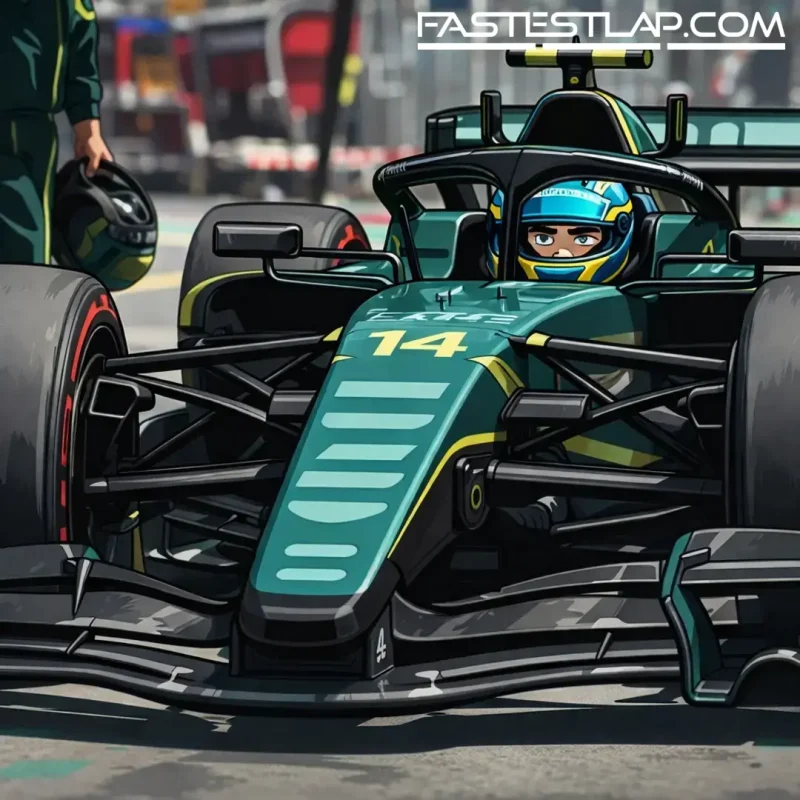
Aston Martin’s mid-season rescue plan is about to hit its busiest stretch, and Honda has offered a useful clue as to how much of it is hype and how much is real.
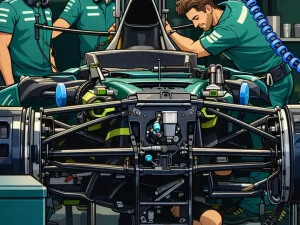
The team will roll out a B-spec AMR26 in Hungary next weekend, then arrive from the summer break with a Honda power unit upgrade at Zandvoort. The chassis side is being sold internally as a proper reset — Adrian Newey has already talked up a “significant weight reduction” in Budapest via changes to the chassis and gearbox architecture, plus revisions around the rear suspension and aero surfaces, capped off with a new nose. But it’s the timing of Honda’s contribution that matters: the Dutch Grand Prix is the first race after the break, when everyone tends to arrive with their best shot and a clearer read of the competitive order.
Honda’s trackside general manager and chief engineer Shintaro Orihara says the engine package slated for Zandvoort is broadly where it should be at this stage. Speaking in Belgium ahead of this weekend’s race at Spa, Orihara confirmed the updated unit is already on the dyno and that the development curve has tracked expectations.
“I think we have three weeks [of summer break] before going to the Netherlands,” he said. “At this point, our engine for the Netherlands is on the dyno to have some sign of testing to bring to the Netherlands. So I think progress is good. I’m not saying performance is achieved [is] top level, but progress is good as we plan. So we are excited to get more power in the Netherlands.”
Pressed on whether the dyno numbers match Honda’s targets, Orihara didn’t play the usual games. “So far, yes,” he replied. “As far as our understanding, progress is as good as we expected.”
The key detail is where Honda’s effort has been spent. This isn’t an all-rounder upgrade across every electrical add-on or system — Orihara was clear that the focus is the internal combustion engine. Honda has also worked on reliability and friction reduction via changes to the lubrication system, which is the sort of line that can be easy to skim past but often has real-world implications. Less friction is free performance, and improved lubrication robustness can be the difference between being able to run a more aggressive operating window or having to leave performance on the table to protect hardware.
“We just focus on the power unit engine power,” Orihara said, shutting down the idea that this is a wider “everything gets better” package.
What will matter just as much as any raw figure is how the updated unit behaves in the car. Orihara hinted that drivability is still being honed and that the final phase of work ties into gearbox integration — an underappreciated part of getting a new-spec engine to feel like an asset rather than an extra variable.
“That is still ongoing,” he said. “The last phase of development is to improve driveability [along] with the gearbox. So we are now working hard to get better driveability with the new power unit.”
For Aston Martin, that sentence is arguably the most revealing of the lot. A power bump on paper is one thing; delivering it in a way that doesn’t punish the rear tyres on exits, doesn’t force awkward energy management compromises, and doesn’t create sudden torque steps that unsettle the car is another. The team’s recovery from a slow start to 2026 has been gradual, but it’s also been fragile — the kind where a small weakness becomes a weekend-defining problem the moment you arrive at a track that leans on it.
That’s why the sequencing of upgrades is intriguing. Hungary brings the B-spec chassis package first, aiming to address weight and architecture — foundational changes that should improve the car everywhere, not just on one type of circuit. Then Zandvoort adds the engine step, which can amplify whatever the chassis has become by that point. If the B-spec works as predicted, the power unit upgrade is a multiplier. If it doesn’t, more power can just make the car’s bad habits arrive sooner and more violently.
Newey has said Aston Martin is “predicting a large step” in Budapest. The paddock will treat that with the usual scepticism — everyone predicts steps; not everyone takes them — but the specifics he’s attached to it are the sort you don’t casually throw into the public domain. Weight reduction via chassis and gearbox architecture changes isn’t a quick bolt-on. It’s invasive, expensive, and it typically means the team believes it’s found performance that’s worth the risk of disrupting a build that already works.
Honda’s message, meanwhile, reads like a manufacturer that’s cautious about proclaiming victory but comfortable that the development process is under control. There’s no claim of a game-changing leap, no suggestion they’ve suddenly found “top level” performance. But there’s also none of the evasiveness you hear when dyno results are underwhelming.
Aston Martin doesn’t need miracles. It needs clean execution across two race weekends separated by the summer break — and it needs the parts to land in the right order, with the right behaviour, and without creating new weaknesses faster than they solve old ones. Hungary sets the platform. Zandvoort shows whether the Honda side can add meaningful muscle to it.
If those two pieces click, Aston Martin’s 2026 narrative could shift from “recovery” to something far more uncomfortable for the teams currently ahead — the sense that this wasn’t a temporary blip in form, but the start of a properly resourced climb.