Honda has spent most of F1’s unscheduled April breather doing something it would rather not be doing in public: firefighting.
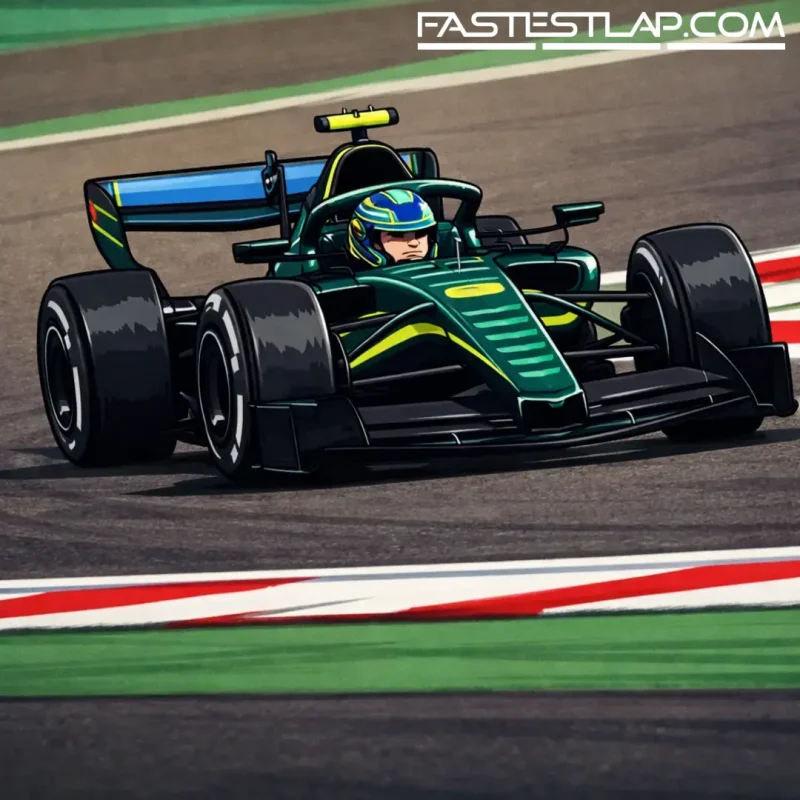
Aston Martin’s new works partnership was meant to be the neat, ambitious storyline of 2026. Three races in, it’s become a bruising reminder that power unit programmes don’t care about marketing plans. After Australia, China and Japan without a single point, the AMR26 has been defined less by lap time and more by the kind of vibration that turns every stint into a tolerance test.
That’s not hyperbole. Adrian Newey didn’t exactly hide behind bland PR in Melbourne when he warned the situation risked “permanent nerve damage” if Fernando Alonso and Lance Stroll were forced to pound around on long runs. When a team boss is talking about injury rather than tenths, you’re already deep into crisis-management territory.
Honda insists it hasn’t stood still since Suzuka. With the Bahrain and Saudi Arabian grands prix postponed, the calendar has gifted Aston Martin and its engine partner a rare five-week window to dig into the problem properly — and, crucially, away from the relentless churn of race weekends.
Shintaro Orihara, Honda’s trackside general manager and chief engineer, says the break has been used for joint work at Honda Racing Corporation’s R&D centre in Sakura, around three hours from Tokyo. The message from Honda is that this is now a combined effort, not a supplier tossing updates over the fence.
“As you know, the Bahrain Grand Prix and Saudi Arabian Grand Prix were postponed, but that doesn’t mean that the work has stopped,” Orihara said in a clip posted by Honda. “After the Japanese Grand Prix, Aston Martin Aramco Formula 1 Team members and Honda Racing Corporation have been working together at HRC Research and Development Centre in Sakura…
“We have been working against the clock to enhance our countermeasures and the work will keep continuing as we approach the next F1 race in Miami. We know that things will take time, but we will keep working hard together.”
The phrasing matters. Honda has already tried “countermeasures” once — and the Suzuka weekend showed just how narrow the line is between a promising fix and a fix you can actually race.
Those measures appeared to do the job in Friday practice at Honda’s home event. Alonso, in particular, sounded like a driver who’d finally been let out of a tumble dryer. He described the car as “completely normal” with “nearly no vibration”, and later put a number on the improvement: “80 per cent better” than what he’d endured in pre-season testing and the opening rounds.
Then came the catch. The same countermeasures weren’t used in qualifying or the race because of reliability concerns. In other words: the solution, as trialled, wasn’t robust enough to trust when the cars were being pushed to the limit for real.
That set up a weekend of mixed signals that didn’t exactly help morale. Alonso went from optimism on Friday to bewilderment on Saturday, insisting nothing had been changed yet the problem had returned in full.
“It’s still the biggest limiting factor,” Alonso said after qualifying at Suzuka. “Yesterday, to be honest, the car felt completely normal. Nearly no vibration.
“I was very positive this morning [but] I jump in the car and I have the same vibrations as ever. And we didn’t change anything, so that was a little bit difficult to understand.
“We are going through all the changes we did overnight to make sure that there is something yesterday on the car that is helping the vibrations. It seems like a bit of a random thing, so let’s see tomorrow if we have a lucky day.”
He wasn’t aware, at least in that moment, that the Friday fix had been pulled for Saturday. That alone tells you how messy the feedback loop can get when you’re chasing a problem that straddles hardware, installation and operating windows — and when you’ve got a driver trying to reverse-engineer what he’s feeling through his spine.
The race itself offered little relief. Alonso did at least get Aston Martin’s first classified finish of 2026, but it came in a lapped 18th — the sort of result that looks less like progress and more like survival.
Miami, then, arrives with a very specific question attached: can Honda’s “enhanced” countermeasures be made reliable enough to run when it counts?
Because if Aston Martin is forced into another weekend of compromises — a car that can be tamed in practice but not trusted in parc fermé conditions — it doesn’t just lose performance. It loses the ability to learn cleanly. Every session becomes contaminated by management of the symptom rather than understanding of the underlying issue.
There’s also a broader, slightly uncomfortable undercurrent here. This is a brand-new regulations era, and everybody knew early-season teething issues were coming. But the Aston Martin-Honda combination has been hit in the one place that’s hardest to park: drivability and physical load. You can carry a bit of drag or a tricky balance and still collect data. When the limiting factor is whether the driver can complete a stint without feeling like his hands have been plugged into a jackhammer, everything else becomes secondary.
Orihara’s admission that “things will take time” is probably the most honest line anyone has delivered on this saga so far. The sport is full of quick fixes; power unit vibration problems that flirt with reliability and driver comfort usually aren’t one of them.
For Aston Martin, the April gap may prove to be a lifeline — not because it magically turns the AMR26 into a points contender overnight, but because it offers something rarer: uninterrupted, collaborative engineering time. If Miami shows the same pattern as Suzuka — Friday promise, Saturday retreat — then the uncomfortable headlines won’t just keep coming. They’ll start to feel inevitable.