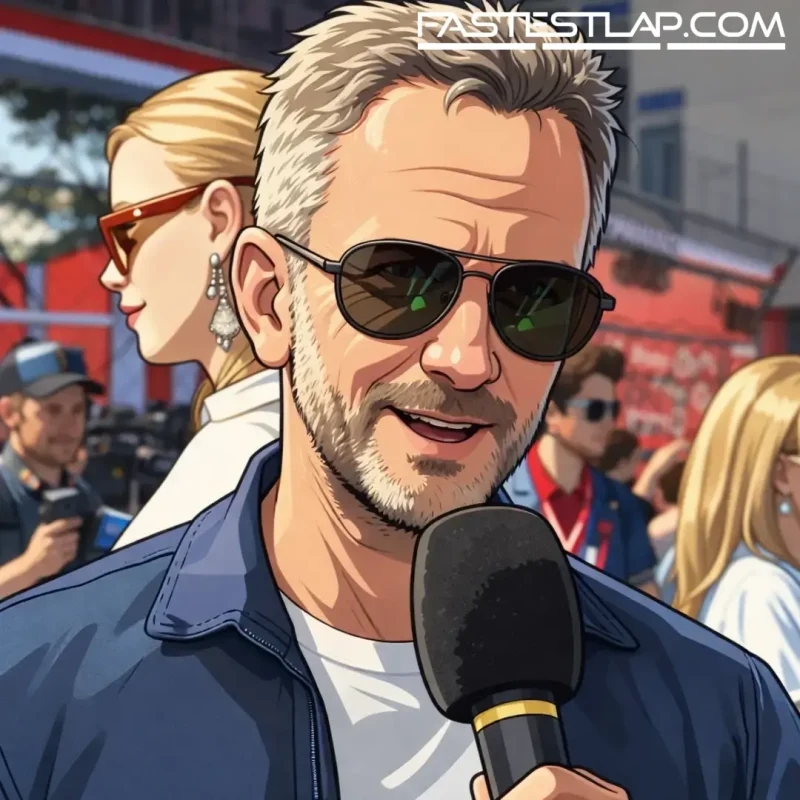
Bernie Ecclestone hasn’t lost the habit of talking about Formula 1 as if he still has a pass to every office in the paddock — and, in fairness, people still listen. This week his attention has landed on two of the sport’s most combustible topics in 2026: what comes next for Christian Horner, and whether Max Verstappen has already watched his best Ferrari window close.
Horner, sacked by Red Bull with immediate effect last year, remains the most high-profile free agent in team management. The longer he’s out, the louder the speculation gets — and the more it starts to shape how any comeback would actually be received. Ecclestone’s read on it is blunt: Horner is in a “difficult position” because the first job back has to work quickly, or it won’t work at all.
That’s the bit many around F1 quietly agree with. Team principals don’t return to the pit wall on reputation alone — not anymore, not with the scrutiny that comes with this new era and the sheer volatility of 2026 performance swings. Horner’s CV will always buy him a seat at the table, but it won’t buy him patience. If he comes back via a project that needs two seasons before it looks respectable, he’s immediately the story every Sunday: Where’s the bounce? Where’s the proof? Was Red Bull the secret sauce rather than the chef?
Two routes have been floated in the background since his exit — Alpine and Chinese manufacturer BYD. They’re very different pitches but share the same trap: if you take on a rebuild and the results don’t move, the narrative moves instead. Ecclestone’s point is essentially that Horner can’t afford an “interesting” job. He needs a winnable one, or at least one that looks winnable fast, because the paddock’s sympathy window is short and the headlines are ruthless.
Ecclestone also stuck his oar into the Verstappen-to-Ferrari debate, suggesting the four-time world champion may have already missed his moment. And in typical Ecclestone fashion, it came with a twist of “I’d have advised him to go.”
It’s not hard to see why this line of thought persists. Ferrari remains the one brand that can turn a driver decision into something larger than sport — into legacy, mythology, the whole thing. But Ecclestone also flagged what every driver knows before they ever set foot in Maranello: Ferrari is its own challenge. The pressure doesn’t just rise; it changes shape. You’re not simply expected to be quick. You’re expected to be the solution, the symbol, and the shield, often all at the same time.
The Verstappen element is particularly interesting because 2026 has already exposed how quickly the competitive landscape can lurch from track to track. In that kind of environment, “missed chance” narratives grow legs even when the reality is more complicated. One strong run from Ferrari and everyone asks why he didn’t jump. One tough weekend and the conversation flips to why anyone would.
Then there’s the practical racing-side subplot that’s beginning to crop up more often as the season grinds on: energy management. Both Verstappen and Lewis Hamilton have raised concerns about the energy demands at Silverstone in F1’s new era, and the implication is that it’s not just a “driver complaint” — it’s a competitive variable that can undermine the show if it becomes too restrictive.
Hamilton, now Ferrari’s home-hero at the British Grand Prix by virtue of geography if not team colours, has a particular sensitivity to what makes Silverstone feel like Silverstone: commitment, flow, the sense that you’re attacking rather than calculating. Verstappen, meanwhile, apparently came away from the simulator experience “laughing” — which sounds like a throwaway line until you remember how often the best drivers use humour to mask frustration when the car is dictating terms.
If Silverstone becomes a case study in drivers lifting and coasting through what should be some of the calendar’s defining corners, it’ll feed into a wider 2026 conversation about whether the regulations have created too many moments where the limiting factor isn’t grip or bravery, but deployment maths.
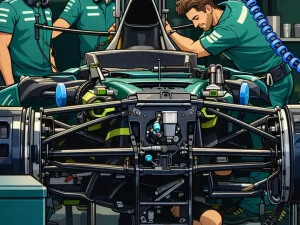
Elsewhere, Adrian Newey has been unusually candid about Aston Martin’s troubled start to 2026 with Honda, admitting the team’s heavily marketed new-era push has run into a “perfect storm of problems”. Newey doesn’t do public self-flagellation for fun; if he’s saying “everything that could go wrong did,” it’s because the list behind that sentence is probably long, expensive, and painful.
Aston Martin’s situation matters beyond its own garage because it’s a reminder that the 2026 reset hasn’t just shuffled the midfield — it’s punished missteps hard. There’s no gentle bedding-in period when the sport is this tightly constrained and development time is this precious.
And while the rumour mill spins in familiar circles — Horner’s next desk, Verstappen’s hypothetical red overalls — Lando Norris has quietly dropped another of those career-future breadcrumbs that get people talking without giving anything away. He’s reiterated he’s open to being “McLaren for life,” but also hinted there’s “only one place” he might consider as an alternative, while keeping his real intentions close.
In 2026, that kind of comment doesn’t land as idle chat. It’s leverage, it’s positioning, it’s a reminder that even in a regulation era that was supposed to reorder the grid, the driver market still has its own gravity. The teams are building for the next technical cycle; the drivers are deciding where they want to be when the next big wave hits.
For now, Ecclestone has done what he’s always been good at: throwing a few well-aimed lines into the paddock and letting everyone else argue about what they really mean. Horner’s “difficult position” is real, because perception will follow him back into any garage he chooses. Verstappen-to-Ferrari will remain the sport’s favourite hypothetical until someone makes it non-hypothetical. And Silverstone might yet provide the next flashpoint in the growing debate over what F1’s new energy reality is doing to the way drivers can race.