Formula 1 has spent much of the opening stretch of 2026 learning, sometimes the hard way, what its new rulebook does when you drop it into the real world. The cars are different, the power units are different, and the racing has been different — occasionally in the way everyone hoped, occasionally in ways that have set off paddock alarm bells.
The sport’s response has been swift by F1 standards. After a fresh round of talks on Monday involving the FIA, Formula One Management, team bosses and the power unit manufacturers — with drivers having already fed in their concerns in what was described as a constructive meeting — a package of tweaks has been agreed and will arrive from Miami next month.
Williams team principal James Vowles was the first to stick his head above the parapet and say, publicly, that this is the right direction of travel.
“These are sensible changes and the teams, FIA and Formula 1 have done good work over the past few weeks to agree them,” Vowles wrote on social media. “F1 has seen some great racing so far this year, but it is right that we always look at ways to keep improving. We look forward to seeing them in action from Miami onwards.”
It’s an important line in the sand, because the debate around 2026 hasn’t been confined to the usual “give it time” versus “burn it all down” split. It’s been about the way the new systems shape driving and, crucially, what they do to the show.
With the regulations bringing a 50/50 split between electrical and combustion power, energy management has become the ever-present backdrop: harvesting, deploying, and living with lift-and-coast as a default rather than an exception. Layer on top the headline-grabbing power boosts — the ones drivers have nicknamed the “mushroom boost” in a not-so-subtle nod to Mario Kart — and you’ve got a racing product that can flip from clever to contrived in the space of one straight.
Those boosts have been linked, in part, to “artificial” overtakes. And when Oliver Bearman’s huge crash at the Japanese Grand Prix sharpened concerns about safety under the new rules, the pressure to refine quickly became unavoidable.
Miami will mark the next step in that refinement. In qualifying, the maximum permitted recharge is being reduced from 8MJ to 7MJ, while peak “super clip” power rises to 350kW. In other words: slightly less opportunity to top the battery up, but more punch available in that crucial deployment phase.
The race settings are being rebalanced more aggressively. The maximum extra power available through the Boost will be capped at +150kW. MGU-K deployment will be set to 350kW in key acceleration zones — from corner exit to the braking point, including overtaking zones — but limited to 250kW elsewhere on the lap. The intent is clear enough: concentrate the performance where it’s meant to matter, reduce the sense that drivers are pressing a button to manufacture a move wherever they like, and hopefully make the energy game feel less like a rolling restriction and more like a deliberate tool.
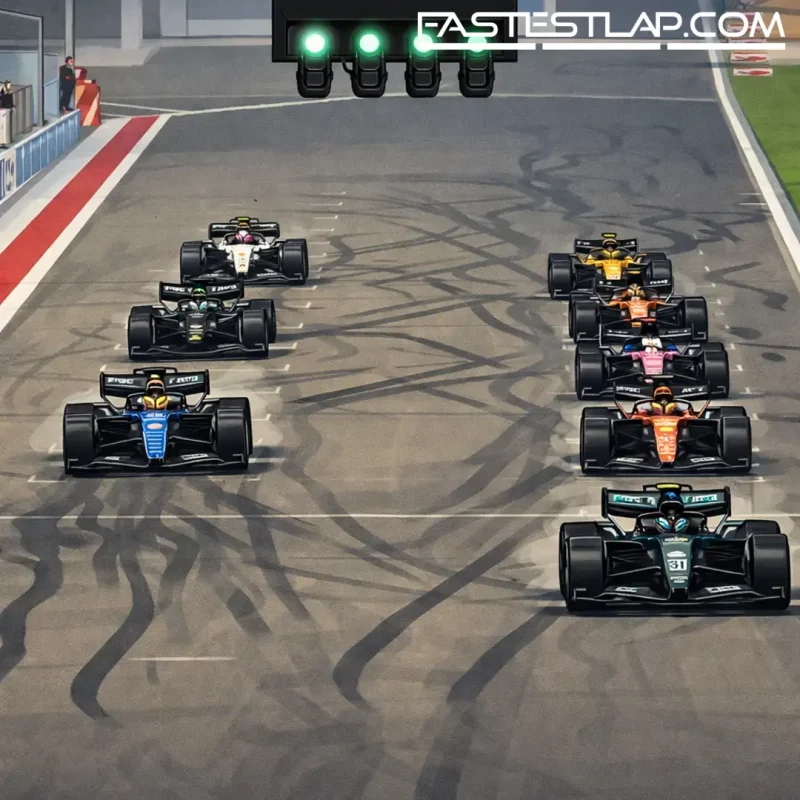
Then there’s the most visceral part of a grand prix weekend: the start. Practice starts have already become a talking point, with enough messy launches to make engineers wince and drivers talk openly about the “chaos” they’ve seen in testing and early running. Alex Albon’s view is that it may not be as dramatic when the lights go out for real in Melbourne, but the concern has been loud enough for the FIA to act.
A new ‘low power start detection’ system has been developed that will trigger an automatic MGU-K deployment to mitigate start-related risks — a tidy bit of governance aimed at stopping the sort of bog-down launches that can create the kind of concertina effect nobody wants to see in 2026 machinery.
Vowles calling the changes “sensible” matters not just because Williams have had their own share of adapting to this new era, but because it reflects a broader truth about where the paddock is right now: teams can live with complexity, and they can live with compromise, but they want clarity — and they want a version of these rules that produces racing that feels earned.
There’s also an underlying political reality. When a regulation reset lands this hard, everybody has skin in the game: teams with strong hardware want stability, those who’ve missed the mark want levers they can pull, and the sport itself needs the racing to look authentic. Getting a multi-party agreement on “refinements” this early is, in that context, a small win.
What Miami won’t be is a final verdict on the 2026 experiment. But it will be the first proper proof-of-concept that F1 can make targeted alterations — a scalpel rather than a sledgehammer — and bring the racing back towards the kind of rhythm drivers and fans recognise.
If the tweaks do what they’re designed to do, we’ll stop talking about power modes as a gimmick and start talking about who’s using them best. And that, more than any headline about mushrooms, is where F1 needs this season to land.