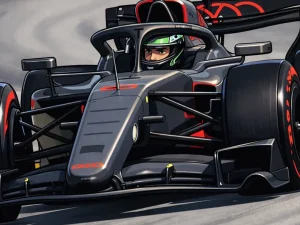
Karun Chandhok has done what plenty of Indian F1 fans have daydreamed about for years: he’s gone back to the Buddh International Circuit and driven a grand prix car around it. In February, he climbed into Sebastian Vettel’s 2012 Red Bull — the machine that won all three Indian Grands Prix when the race briefly lived on the calendar — and put in laps on the long main straight and sweeping infield that once hosted Formula 1 between 2011 and 2013.
The nostalgia is easy. The politics and logistics, less so.
With talk swirling again about an Indian Grand Prix revival, Chandhok has moved to puncture the more optimistic timelines doing the rounds. His view is blunt: India isn’t getting a slot back in the near term, and 2027 is off the table. If it happens, he reckons 2029 is the earliest realistic target — and even that comes with a long list of caveats.
That cooler assessment lands after India’s sports minister, Mansukh Mandaviya, suggested last week that an F1 race could return as soon as 2027. Formula 1 has already distanced itself from that idea, pointing to an already-packed 24-race calendar and the fierce competition from other would-be hosts for any available space.
Chandhok’s take isn’t framed as cynicism so much as a checklist, and it’s a checklist shaped by the stuff fans don’t see on TV. In a social media video, he said his phone had been “ringing non-stop” with questions about the Indian Grand Prix and used the moment to lay out what has to happen before anyone should start circling dates.
First up, he pointed straight at government support — not in the vague “back the event” sense, but in the detail that can quietly sink an international race weekend. Chandhok wants clarity around the regulatory and legislative side, and he flagged the practical pressure points: taxation, customs, and visas. He even referenced MotoGP as a cautionary tale, noting that Marc Marquez had visa issues, a reminder that if one of the biggest names in world motorsport can get caught in bureaucracy, an entire paddock can too.
The second pillar is the one that always decides whether these comeback stories are real or just hopeful noise: money. Chandhok’s question is the key one — who pays? The circuit owner, a promoter, the government, or some joint venture? It’s not simply about signing an initial contract; it’s about making the numbers work year after year, including the costs of running the event and the rights fees.
And, crucially, it’s about avoiding the trap of a short-term splash. Chandhok pointed to how the previous Indian GP run ended after three editions, and he referenced MotoGP and Formula E as examples of series that arrived and then disappeared after a year. In his view, if India returns to F1 it has to be built like a long-term project, not a one-off moment of national pride.
Only then does he get to the bit most fans immediately think about: the circuit itself. Chandhok is emphatic that Buddh’s core layout hasn’t suddenly become unfit for purpose. He described the “ribbon of asphalt” as still being in good condition, along with the kerbs — and he’s in a position to say so, given he’s the most recent person to have driven an F1 car there.
But that’s not the same as saying the venue is ready to host a modern F1 event tomorrow. Chandhok expects upgrades to infrastructure and facilities: hospitality, safety standards, and the team buildings. Essentially, the business end of an F1 weekend — the paddock, the garages, the corporate side that underwrites the event — needs to meet today’s expectations, not those of the early 2010s.
Then there’s the final, immovable obstacle: the calendar. Even if India’s regulatory framework is smoothed out, even if a sustainable financial model is locked in, even if Buddh is refreshed and ready, there still has to be a date available. With F1 already at 24 races and “a lot of long-term deals in place”, Chandhok can’t see an opening until 2029 and suggested 2030 might be more likely.
It’s a reality check that will frustrate anyone who wants the Indian Grand Prix back immediately — especially given how strong the appetite is, and how effective India can be as a market when the right motorsport product is in front of it. But it’s also the most pragmatic argument made so far: that the timeline isn’t just about desire, it’s about aligning government support, commercial structure, venue readiness and calendar availability.
Chandhok did offer a sliver of encouragement. He said he’s been “very encouraged” by early enthusiasm and noises from both the Adani Group and the government, but stressed the need to take it step by step. In other words: don’t confuse momentum with a deal, and don’t confuse a statement with a signature.
For now, the Buddh circuit remains what it’s been for more than a decade — a fully-formed grand prix track with a proper F1 history, sitting just outside the sport’s current orbit. Chandhok’s message is that India can get back in, but only if it approaches the return like a serious, long-haul programme. And if anyone is hoping for a quick win in 2027, they should probably stop refreshing the calendar and start watching the contracts.