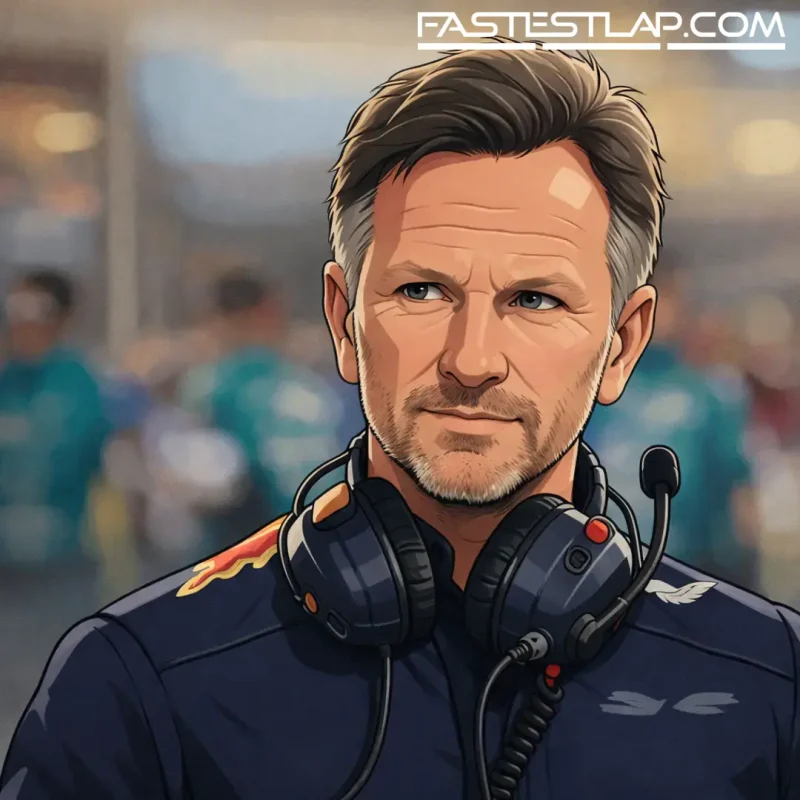
Christian Horner has started doing the rounds again — but this time without the headset, the pitwall glare, or the weekly obligation to pretend Monaco isn’t a slow-motion stress test.
Spotted on the grid at last weekend’s Monaco Formula E event, the former Red Bull team boss sounded almost amused by the novelty of being just another paddock face. “It’s really nice being at a race where you have absolutely no pressure,” Horner said on the official Formula E broadcast. “I’m just going to enjoy the weekend and learn a little bit more about this championship.”
For a man who spent more than two decades operating at the sharp end of F1 — and who was ultimately sacked by Red Bull in July 2025 after overseeing eight drivers’ titles and six constructors’ championships — that line landed with a bit of bite. Horner has been out of the F1 day-to-day long enough for the tension to drain, but not long enough for anyone in the paddock to believe he’s done.
And now there’s a clean, practical reason his name is back in circulation: Horner is officially free to return.
He agreed a settlement with Red Bull last September worth $100m, and it’s understood that part of the exit terms included a non-compete clause that blocked any immediate move back into Formula 1. That clause has now expired — it’s believed it lapsed on May 8 — removing the one hard barrier that mattered. Everything else is just positioning.
His Monaco appearance came not long after a separate paddock visit: Horner was seen at MotoGP’s Spanish Grand Prix at Jerez last month alongside Formula 1 president and CEO Stefano Domenicali. That, inevitably, sparked whispers that he might be lining up something in the two-wheeled world — especially with Liberty Media having completed its MotoGP takeover last year.
But the more persuasive read is simpler. Horner has always understood that access is currency. Jerez and Monaco look less like a career change and more like a reminder: he’s still connected, still interested, and still someone worth returning calls for. Those Liberty links, by all accounts, haven’t gone cold.
In Monaco, he also found time to chat with Williams driver Carlos Sainz and former Red Bull race winner Mark Webber — the kind of conversations that don’t guarantee anything, but do underline how easily Horner still moves through this world. He doesn’t look like a man on a farewell tour. He looks like a man waiting for the right door to open.
That brings us to the two most obvious doors.
Alpine has been the clearest, most tangible route back in. The team confirmed in January that a group of investors including Horner had expressed interest in purchasing Otro Capital’s 24 per cent stake. It’s a foothold rather than a takeover, but in modern F1, governance and influence can come from unusual angles — particularly when the person involved has Horner’s track record and political weight.
There’s also a second strand to the Alpine story: Flavio Briatore has said Mercedes is interested in acquiring the same stake. That sort of competitive interest matters because it sets a market, raises the stakes, and can accelerate decision-making. If that shareholding becomes a battleground, Horner’s involvement stops being a curiosity and starts looking like a statement of intent.
Then there’s Aston Martin, where Horner is understood to remain in contention for a senior role. Lawrence Stroll is believed to be keen on bringing him in with CEO-style authority — the kind of remit that would suit Horner’s strengths, and perhaps appeal after the way his Red Bull stint ended. It’s not just about running a race team; it’s about shaping the entire operation.
Aston’s attraction is also obvious on a personal level. Adrian Newey, Horner’s former colleague, acquired a shareholding in the team as part of his move from Red Bull last year. That link doesn’t automatically pull Horner in too, but it does add another layer to the paddock logic: if Aston is stacking leadership and technical clout at the top, Horner becomes a name that fits the pattern.
For now, Horner is playing it like a man with options — which, frankly, is exactly what he’s been waiting for since the day he walked out of Milton Keynes. The line about “no pressure” in Monaco might have been a throwaway gag, but it also read like someone enjoying the last few quiet weekends he’ll get.
Because once the calls turn into meetings and the meetings turn into signatures, the pressure comes roaring back — and in Horner’s case, it tends to follow him into the room before he even arrives.