Mohammed Ben Sulayem has thrown a very deliberate warning shot across the bows of any outfit hoping to expand its footprint in the F1 paddock: owning two teams might be technically possible, but in his view it cuts against what the championship is supposed to be.
The FIA president’s comments land at an awkward moment, with Mercedes among the parties reported to be exploring a purchase of Otro Capital’s 24 per cent stake in Alpine. It’s the sort of opportunity that barely exists in modern F1 — a meaningful slice of a constructor coming onto the market — and it’s arrived in an era where valuations have gone stratospheric. Otro paid $233 million for the shares in 2023; with Alpine now valued at an estimated $3 billion, that same holding could command as much as $720 million.
Little wonder, then, that Ben Sulayem’s first reaction was to shrug at the idea of interest. “Who is not interested?” he said, quoted by The Times. “Really, everybody is there.” The more telling part came afterwards, when he laid out what he sees as the real risk: not the money, not the branding, but the leverage.
Multi-team ownership — the A/B team model — has been back in the spotlight since the Mercedes link emerged. Former Red Bull team principal Christian Horner and a consortium have also been associated with interest. And while the early noise suggested Toto Wolff was personally involved, Alpine’s de facto boss Flavio Briatore insisted the approach was from Mercedes as a company rather than its team boss.
“Every day is a new situation,” Briatore said. “But what I want to say, I know it’s the negotiation from Mercedes – not with Toto, with Mercedes – and we’ll see.
“In this moment, we have three or four potential buyers – don’t forget, we’re talking about the Otro share, nothing to do with Alpine. There are a few candidates ready to do the deal.”
Even with that framing — that this is about a private equity stake rather than a wholesale takeover — it still raises the central question Ben Sulayem doesn’t want brushed aside: what does it do to competitive independence if a major player has its hands in more than one constructor?
He’s not pretending there’s a simple, clean rule to point at. In fact, he openly described it as “a complicated area” and confirmed the FIA is having its own people assess whether such a move would be permissible and, just as importantly, whether it would be appropriate.
The line he drew was a revealing one. He suggested he could accept multi-team ownership “as long as it’s for the right reason” — but then immediately started listing the wrong ones: blocking rivals from gaining access, or tilting the political landscape by acquiring “voting power when it comes to the regulations”.
That’s the subtext here. F1 teams are competitive entities, yes, but they’re also political actors. The ability to influence the direction of regulation — directly or indirectly — is worth almost as much as lap time. When Ben Sulayem talks about “sporting spirit”, he’s not being sentimental. He’s pointing to the thing that underpins the show: the perception that each team is ultimately pulling for itself, not running parallel interests.
“If we lose, honestly, the sporting spirit, I believe that there will not be any more support in [the sport],” he said. “So to me, as I said, I’m not with [support of] it 100 per cent.”
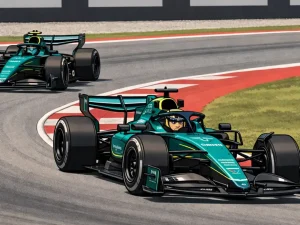
Of course, any attempt to clamp down now comes with a ready-made counterargument: Red Bull already owns two teams, Red Bull Racing and Racing Bulls. Ben Sulayem will know that if the FIA blocks one structure while another continues, accusations of selective enforcement will arrive instantly — and loudly.
There’s also the historical nuance that defenders of the Red Bull model lean on: the second team was bought from Minardi at a time when F1’s financial landscape looked very different to today’s profit-making, high-valuation environment. Whether that context should matter in 2026 is exactly the kind of debate that turns a governance question into a paddock brawl.
Ben Sulayem’s intervention didn’t stop at ownership models either. In the same breath as he addressed interest around Alpine, he was asked about Horner — and offered a notably warm assessment of a figure who remains one of the most influential operators of his era.
“Who can remove Christian Horner’s name from motorsport and Formula 1? You can’t,” Ben Sulayem said. “It was always success. But success also has enemies, as we know.
“If you ask me, we miss him in this sport, and I keep in touch with him, and he was good for the [Red Bull] team, good for the sport. We welcome him back, and someone like him would always find his way [back].”
Taken together, it paints an interesting picture of where the FIA president wants to plant his flag: he’s open to big personalities and big money, but less comfortable with big structures that could blur the boundaries between rivals.
Now the ball is with the rule-makers and lawyers, because Ben Sulayem has effectively put Mercedes — and anyone else eyeing that Alpine stake — on notice. Even if a deal can be made to work on paper, the regulator is clearly preparing to ask a more uncomfortable question: whether it should.