Kimi Antonelli has spent most of 2026 making pole position feel like a formality: start first, control the rhythm, turn Sunday into a statement. Silverstone was the day that neat story fell apart — and, in the process, offered a reminder that the championship doesn’t only reward brilliance. It rewards survival.
Antonelli lined up on pole for the British Grand Prix and, for a moment, it looked like another weekend in the same mould. But the opening lap immediately dragged him into a proper fight, and he was quickly boxed in by Ferrari on either side — Charles Leclerc and Lewis Hamilton turning Turn 1 into a corridor with no room to breathe. The Mercedes was quick enough to stay in the conversation; the problem was it didn’t stay intact.
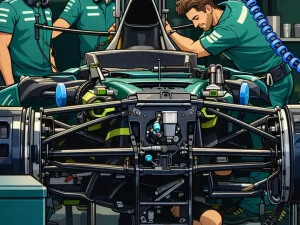
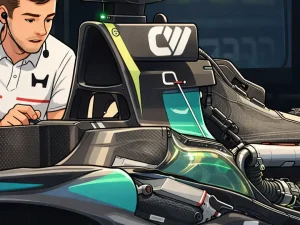
Chasing Leclerc, Antonelli clipped a kerb with the left side of his W17 at the wrong angle and broke the left-front wheel shield. The damage wasn’t cosmetic. It was the sort of thing that changes the way a car feels at high speed, the sort of thing that makes every corner entry a little less trustworthy and every lap a small negotiation.
Antonelli wanted to push on regardless, convinced there were still points to be salvaged even if the win had already slipped away. Mercedes, understandably, took the conservative option and called him in to remove the damaged part. By the time he rejoined, the race he’d been set up to win had turned into the kind of scrappy recovery drive drivers insist they “learn a lot from” — usually because they’d rather not dwell on how painful it felt.
Then came the other problem: track limits. Wrestling a compromised car around Silverstone’s fast sweepers is hard enough; doing it while staying cleanly inside the white lines is harder still. Antonelli picked up a five-second penalty for violations, and while he argued over the radio that the car was damaged, the stewards weren’t interested. They didn’t accept a mechanical issue as a justifiable reason for leaving the track.
So the damage didn’t just knock him out of the lead fight; it left him with a penalty that sealed his afternoon. From the moment the issue struck — when he’d been running as high as P2 — the trajectory only went one way. Antonelli ultimately ended up 16th once the penalty was applied.
Former team boss Otmar Szafnauer looked at the sequence and saw something bigger than a messy Sunday: a reminder that even the quickest young talents have a skill to acquire that doesn’t show up on the timing screens on Saturdays. Can you bring a wounded car home in a way that still matters?
“It’s part of learning the sport,” Szafnauer said on the High Performance Racing podcast, suggesting that more seasoned drivers might have adapted more effectively to the loss of the wheel shield. “That could be all part of learning… It’s part of growing up for him in the sport.”
Szafnauer’s point wasn’t that Antonelli lacks ability — if anything, 2026 has been a rolling demonstration of his speed and composure at the front. It was that there’s a difference between being fast in a car that behaves and being effective in a car that doesn’t. And when Szafnauer reached for an example, he went to the gold standard of problem-solving at 300km/h.
“Michael Schumacher was a genius at that, bringing the car home,” he said. “It didn’t matter… there are races where he only had fifth gear left, and he brought the car home. He was really, really good.”
It’s a brutal compliment, really. Schumacher comparisons are usually about pace, aura, ruthlessness. This one is about damage limitation — about the grimy, unglamorous craft of taking what you’re given and somehow making it count. Szafnauer framed it as a “string in your bow” that’s necessary to win world championships, and it’s hard to argue with the principle. Titles don’t get decided only by the days you’re uncatchable; they’re shaped by the days you’re limping.
The sting for Antonelli is that Silverstone should’ve been a banker. Pole at a track where clean air is worth a fortune, a car strong enough to lead, and the momentum of a season that’s been trending his way. Instead, it became a points bleed — and the kind that invites a paddock-wide chorus of “that’s where championships swing”.
He still leads the championship, but the margin has tightened: his advantage over George Russell is down to 25 points. In mid-season terms, that’s not panic stations — but it’s also not comfortable. One more afternoon like Silverstone, and the psychological balance shifts, especially inside a team where the other side of the garage will have smelled opportunity.
Antonelli will brush this off publicly, as drivers do. But the takeaway is clear: the raw tools are there — the poles, the control, the aggression when it’s needed. Now comes the phase that separates fast drivers from champions. When the car isn’t right, when the race gets ugly, when the stewards aren’t sympathetic and the tyres are past their best — can you still leave with something?
Silverstone answered that question the hard way. The next few rounds will show how quickly Antonelli turns it into progress.